

Reservoir

Three papers are highlighted as the primary contributions because of their broad industry relevance. They focus on improving formation particle-size characterization, expanding the application of openhole gravel packs in depleted and compartmentalized reservoirs, and advancing the understanding of capillary pressure in sand production.

This paper aims to establish a set of best practices for generating particle-size-distribution data from core samples.

This paper discusses the successful execution of two openhole gravel-pack completions in two Gulf of Mexico fields with depleted reservoirs.
-
 By integrating experimental and mathematical modeling approaches, this work aims to advance the understanding of sand-detachment dynamics and formation instability under varying saturation conditions.
 -
This study explores the carbon-capture and mineralization potential of ultramafic rock powders when exposed to flue gases generated from combustion of crude oil and mesquite-derived charcoal.
-
This paper documents the testing, integration, and field deployment of a metal expandable packer used as an openhole toe isolation plug in a deepwater well under high-pressure, high-temperature conditions.
-
Investment research firm TSCS reports that 60 to 65% of the highest-quality acreage in the Permian Basin, the most productive US shale basin, has already been drilled. The firm also estimates that only 3 to 4 years of Tier 1 premium inventory remains at the current drilling rate. This is driving industry-wide strategy shifts as companies move to lower tier and specula…
-
EY reports an 11% decline in reserve additions and the first sub-100% reserve replacement ratio since 2021, even as crude output climbed.
-
SponsoredWith operators under pressure to deliver more energy with fewer resources, predictable drilling performance is more important than ever. Discover how a unified digital workflow can turn drilling data into better decisions and consistent execution—providing the foundation for autonomous drilling and more predictable, profitable, and productive wells at scale.
-
The shale revolution, the Paris Agreement, and the global pandemic each transformed energy markets. Now, industry leaders say energy pragmatism is emerging.
-
This article from the SPE Integrated Reservoir Management Technical Section (IRMTS) examines the closed-loop IRM approach, from insight to execution to learning, and the limits of technology-driven solutions.
-
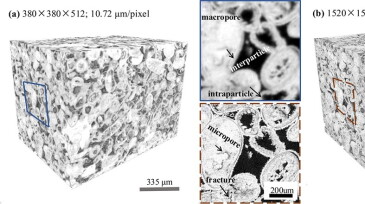
Imaging carbonate rocks at high resolution without losing scale has long been a challenge. A novel framework is introduced that enables accurate super-resolution and extrapolation of carbonate rock images, enhancing micro-CT images while preserving mineralogical and topological features for more reliable pore-scale analysis and flow simulations.
-
As Egypt’s largest oil and gas investor, Eni is ramping up its 2026–2027 drilling campaign with new investments cross the Mediterranean offshore, Nile Delta, Western Desert, and offshore Sinai to strengthen the country’s role as a regional gas and LNG export hub.






Page 1 of 162