Reservoir

Three papers are highlighted as the primary contributions because of their broad industry relevance. They focus on improving formation particle-size characterization, expanding the application of openhole gravel packs in depleted and compartmentalized reservoirs, and advancing the understanding of capillary pressure in sand production.

The solvent-based technology involves a modular treatment process that uses a proprietary catalyst designed to safely and sustainably remove hydrogen sulfide (H₂S) from sour gas streams using either produced water or an alkaline water as the treating media.

This paper aims to establish a set of best practices for generating particle-size-distribution data from core samples.
-
 A new Eni/Petronas venture is targeting 500,000 BOE/D in output from combined upstream portfolios across Malaysia and Indonesia.
 -
The merger creates one of the largest oil-focused independents in the US with output of 526,000 BOE/D.
-
BPX Energy will retain operatorship of the assets after the sale of its interests to private investment firm Sixth Street is complete.
-
This paper describes development of a high-temperature water-based reservoir drill-in fluid using a novel synthetic polymer and customized with optimal chemical concentrations and sized calcium carbonate.
-
The objective of this microfluidic investigation is to identify and test two novel applications for magnetic fluids in porous media for subsurface oilfield applications.
-
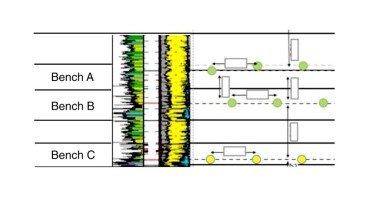
The aim of this study is to incorporate detailed geological, petrophysical, and hydraulic fracturing models to better predict and mitigate the effects of interbench interactions.
-
This paper describes a study to design and implement an enhanced oil recovery project via huff ’n’ puff using Y-grade injectant.
-
The objective of this paper is to apply a developed workflow to determine the propped hydraulic fracture geometry in a horizontal multistage fractured well, incorporating production, pressure, and strain data.
-
This study compares water-based chemicals including surfactants, nanoparticles, and ketones that can be used for enhancing the oil recovery of shale-oil reservoirs.
-
Entrepreneurial mindsets with the motivation to explore new materials, not limited to focusing on traditional hydrocarbon gas, carbon dioxide, and chemicals such as polymer and surfactant, are becoming more important for broadening prospects beyond the conventional EOR scene.