Reservoir

Coreflood experiments reveal that alkali significantly reduces viscosity loss in polyacrylamide flooding systems by minimizing adsorption and improving polymer stability under shear stress. The findings position viscosity retention as a key screening criterion for successful alkali-polymer enhanced-oil-recovery applications.

This SPE technical section editorial synthesizes six technical themes shaping CO2 transport and storage and interprets them through a petroleum engineering capability lens.

The UAE project is expected to produce up to 345 MMscf/D by 2029, with expansion potential to 1 Bcf/D.
-
 This paper reviews the design and implementation of a full-field interwell tracer program for a giant onshore oil field in Abu Dhabi.
-
For nearly a decade, Saudi Aramco has been studying how altering the chemical makeup of seawater injected into its reservoirs can increase production. The result is "smart water" that can boost the sweep effectiveness of a waterflood.
-
Distributed temperature sensing (DTS) is the most common fiber-optic measurement used for steam-assisted-gravity-drainage reservoir monitoring.
-
In this study, the authors demonstrate a reliable, cost-effective methodology that empowers shale operators with reservoir data on every well.
-
Researchers at Heriot-Watt University in Edinburgh, Scotland, are building replica core samples using 3D printers and installing sensors inside them as they go. Their goal is to directly monitor pore-scale flow behavior from the inside of these so-called “smart rocks.”
-
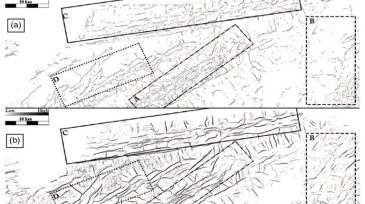
The tedium of identifying small faults in often murky seismic images pushed Dustin Dewett, an associate geophysicist for BHP Billiton, to develop a better way to use the tools at hand.
-
In this study, samples of flowback water and downhole shales are analyzed to investigate the mechanisms controlling the chemistry of flowback water.
-
Coalbed methane development can require a large volume of wells, but the costs of logging can be prohibitive, so alternate formation-evaluation solutions are being evaluated. This paper compares state-of-the-art mining logging technology with conventional oil-and-gas approaches.
-
Research and development firm Battelle is working on a new induced-seismicity study that aims to help wastewater disposal well operators in Ohio stay on the good side of state regulators.
-
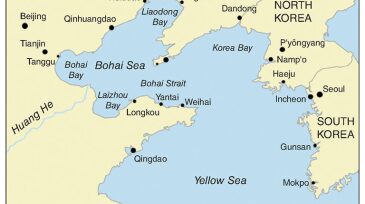
A new multilayer boundary‑detection service has been introduced to resolve the geological uncertainty associated with horizontal wells in Bohai Bay. Geosteering and real time reservoir characterization were used to reduce the uncertainty.