Reservoir
Coreflood experiments reveal that alkali significantly reduces viscosity loss in polyacrylamide flooding systems by minimizing adsorption and improving polymer stability under shear stress. The findings position viscosity retention as a key screening criterion for successful alkali-polymer enhanced-oil-recovery applications.

This SPE technical section editorial synthesizes six technical themes shaping CO2 transport and storage and interprets them through a petroleum engineering capability lens.
The UAE project is expected to produce up to 345 MMscf/D by 2029, with expansion potential to 1 Bcf/D.
-
 Reservoir-simulation-model inputs are numerous, and uncertainty is pervasive—before, during, and after development. With the pressure to deliver results quickly, how do we find the right balance?
-
In upstream oil and gas, cloud computing is very immature because the industry has always been challenged by storage and computational capability. However, high-performance cloud computing may create an opportunity for smaller companies lacking infrastructure for scientific applications.
-
In this study, detailed petrophysical and geological field models focusing on the middle and lower members of the Bakken Formation were developed.
-
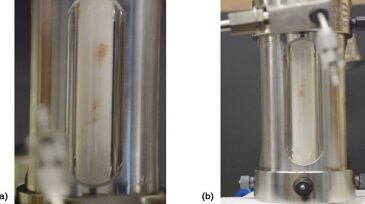
Carbon dioxide (CO2)/water foams are of interest for mobility control in CO2 enhanced oil recovery (EOR) and as energized fracture fluids or as hybrid processes that combine aspects of both processes.
-
There remain a number of challenges with CO2 EOR. These include gravity override, poor sweep efficiency, and economic factors.
-
The low recovery rates observed in most shale reservoirs has prompted a number of research projects to develop new enhanced oil recovery methods.
-
Part of what makes DME an intriguing EOR technology is that it is soluble in both water and oil—with a preference for the latter. Shell’s plan is to add DME to the waterflooding stream to reach a concentration of about 16%, the upper limit of its dissolvability.
-
In an effort to foster collaboration in an area where there is currently very little, researchers at the University of Texas at Austin (UT) created a new web-based application for storing and sharing CT images of rocks.
-
This paper describes a gas-injection pilot that has been implemented in offshore Middle East carbonate reservoirs to assess injectivity, productivity, macroscopic-sweep efficiency, flow assurance, and operational efficiency in a field that has a long water-injection history.
-
The operator has initiated a cyclic-steam-stimulation project in the Opal A diatomite of the Sisquoc formation on the Careaga lease in the Orcutt oil field in Santa Barbara County, California. This paper discusses steam-injection step-rate tests (SRTs) for this asset as part of its expansion.