Reservoir

Coreflood experiments reveal that alkali significantly reduces viscosity loss in polyacrylamide flooding systems by minimizing adsorption and improving polymer stability under shear stress. The findings position viscosity retention as a key screening criterion for successful alkali-polymer enhanced-oil-recovery applications.

This SPE technical section editorial synthesizes six technical themes shaping CO2 transport and storage and interprets them through a petroleum engineering capability lens.

The UAE project is expected to produce up to 345 MMscf/D by 2029, with expansion potential to 1 Bcf/D.
-
 With the world’s fifth-largest estimated shale gas reserves, there is great potential for Saudi Arabia to replicate North America’s unconventional growth.
-
A strategic objective of Saudi Aramco is exploring and developing deep and unconventional gas reservoirs, many of which are considered extremely tight.
-
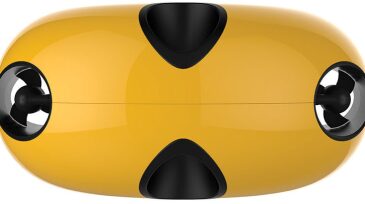
Autonomous Robotics’ first offering is built around a rounded yellow device that looks like a little flying saucer.
-
A matured field is currently producing with greater than 85% water cut (WC) and has significant levels of uncertainty with respect to oil/water contact (OWC), flank structure, depth of spill points, production allocation, and residual oil saturation.
-
Rising demand for flowback technologies to reduce uncertainties is leading to the creation of more hydrocarbon and water tracers. These chemical-based tracers may play an important role in the shale industry’s effort to come up with more cost-effective fracture designs.
-
An area of great interest to those researching flowback is the interaction of water and salt inside the shale reservoir. After a well is stimulated, the flowback fluids tend to show a rising concentration of salt that falls back to near zero over time.
-
On the far end of the flowback spectrum is a completion process called soakback. If the well has to be shut in until takeaway capacity is available, the completion fluids soak into the shale rock. Flowback analysis can help understand what happens in the formation.
-
The need for cost and capital efficiency calls for careful integration of technical and commercial elements.
-
This paper will examine ways in which Chance of Development (CoD) can be defined better, methods for its estimation, and its appropriate application along with common misuses.
-
Researchers at Yale University who analyzed groundwater wells in the Marcellus Shale area have determined that hydraulic fracturing is highly unlikely to be a direct source of contamination.