Reservoir

Coreflood experiments reveal that alkali significantly reduces viscosity loss in polyacrylamide flooding systems by minimizing adsorption and improving polymer stability under shear stress. The findings position viscosity retention as a key screening criterion for successful alkali-polymer enhanced-oil-recovery applications.

This SPE technical section editorial synthesizes six technical themes shaping CO2 transport and storage and interprets them through a petroleum engineering capability lens.

The UAE project is expected to produce up to 345 MMscf/D by 2029, with expansion potential to 1 Bcf/D.
-
 The transaction adds 267,000 net acres and nearly 140,000 BOE/D from Vital Energy, lifting Crescent into the top 10 largest US independents.
-
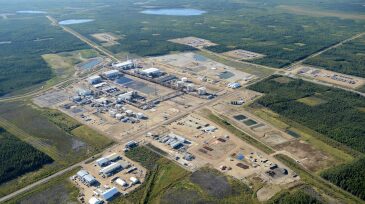
The latest acquisition strengthens Cenovus Energy’s position as Canada’s largest SAGD producer.
-
The collaboration has announced Closed Loop Fracturing, which combines real-time subsurface data with automated surface control.
-
Shale’s slowdown leaves room for OPEC+ gains as tensions rise between the US and India over Russian oil imports.
-
The number of high-impact wells drilled across the globe this year are expected to be on trend with the most recent 5-year average.
-
This study integrates physics-based constraints into machine-learning models, thereby improving their predictive accuracy and robustness.
-
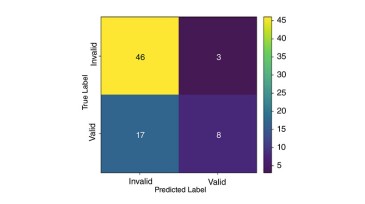
This paper introduces a machine-learning approach that integrates well-logging data to enhance depth selection, thereby increasing the likelihood of obtaining accurate and valuable formation-pressure results.
-
This study aims to use machine-learning techniques to predict well logs by analyzing mud-log and logging-while-drilling data.
-
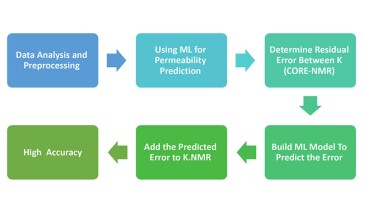
A compelling triptych of recent research showcases the burgeoning capacity of machine learning to unlock substantial efficiencies and enhance decision-making across the exploration and production lifecycle.
-
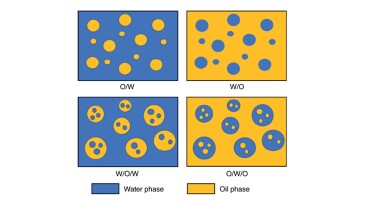
This study presents the development of a novel modeling tool designed to predict condensate emulsions, focusing on key factors causing emulsions such as pH, solid content, asphaltene concentration, droplet size, and organic acids.