Reservoir

As Egypt’s largest oil and gas investor, Eni is ramping up its 2026–2027 drilling campaign with new investments cross the Mediterranean offshore, Nile Delta, Western Desert, and offshore Sinai to strengthen the country’s role as a regional gas and LNG export hub.

The industry is no longer short of measurements; the real challenge is converting them into timely reservoir decisions that protect value. That challenge is becoming more urgent as the industry depends increasingly on mature fields and existing infrastructure. The selected papers show how this need is being addressed across different producing regions.

This paper presents a case study from a mature field redevelopment project where pulsed neutron logging was integrated with advanced reservoir modeling to improve the understanding of fluid-contact dynamics and optimize new horizontal well placement.
-
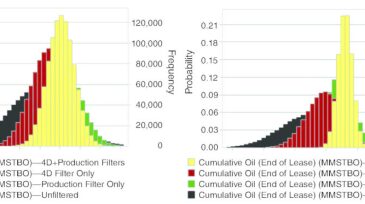
 This paper outlines the value of 4D for reducing uncertainty in the range of history-matched models and improving the production forecast.
 -
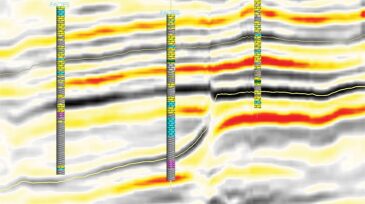
This paper discusses a project with the objective of leveraging prestack and poststack seismic data in order to reconstruct 3D images of thin, discontinuous, oil-filled packstone pay facies of the Upper and Lower Wolfcamp formation.
-
Last year saw continued contraction in the seismic data-acquisition industry. With this drop in acquisition business, fewer seismic data-acquisition papers were published. Nevertheless, three very good SPE papers covering important acquisition and processing topics are featured here.
-
Production growth in the Permian Basin requires drill rigs running at a high pace. That is challenging companies to push well productivity.
-
The agency updated its methodology and production volume estimates to factor increasing production from new, emerging plays as well as older plays that have rebounded thanks to drilling advancements.
-
The struggle to overcome the challenge of frac hits has led to a critical dialogue about which pathway the shale sector should take. One idea is to simply put the problem at the center of every major decision.
-
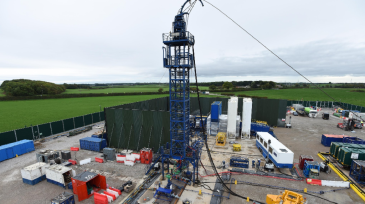
UK’s first horizontal shale well has yielded positive results after an initial flow test. But further testing—and fracturing of a second well—will have to come amid a continuation of UK’s stringent regulations on induced seismicity.
-
Electromagnetic images can show where water flows during a hydraulic fracture. A test in the Anadarko Basin showed a fault there was a bigger hazard than expected.
-
This paper describes the acquisition and interpretation of long-term pressure-buildup data in a plugged and abandoned deepwater appraisal well.
-
Diagnostic fracture injection tests (DFITs) incur direct and indirect costs resulting from the tests themselves and the extended time required for the pressure falloff, which delays the completion of the well. The benefits, therefore, must outweigh the costs if the test is to be justified.