Reservoir

As Egypt’s largest oil and gas investor, Eni is ramping up its 2026–2027 drilling campaign with new investments cross the Mediterranean offshore, Nile Delta, Western Desert, and offshore Sinai to strengthen the country’s role as a regional gas and LNG export hub.

The industry is no longer short of measurements; the real challenge is converting them into timely reservoir decisions that protect value. That challenge is becoming more urgent as the industry depends increasingly on mature fields and existing infrastructure. The selected papers show how this need is being addressed across different producing regions.

This paper presents a case study from a mature field redevelopment project where pulsed neutron logging was integrated with advanced reservoir modeling to improve the understanding of fluid-contact dynamics and optimize new horizontal well placement.
-
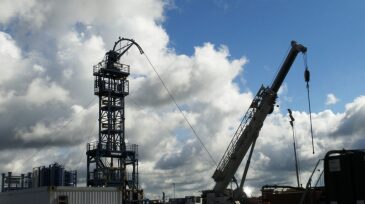
 Widely held images of what happens when a well is fractured often bear little resemblance to what actually happens underground.
 -
Shale gas is one of least sustainable options for producing electricity, according to new research from The University of Manchester, which considered environmental, economic, and social sustainability factors.
-
Progress in chemical EOR, from polymer to alkaline/surfactant/polymer, has been significant. Not only are there new chemicals with improved recovery capabilities, but also the cost of the chemicals is being reduced continuously. All those factors led to more operators using chemical EOR.
-
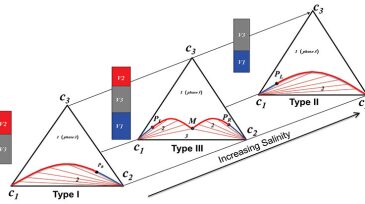
The complete paper presents a new three-phase relative permeability model for use in chemical-flooding simulators.
-
In the complete paper, three stages of review have been combined to find out the applicability of the most-feasible improved-oil-recovery (IOR) methods in North American unconventional reservoirs.
-
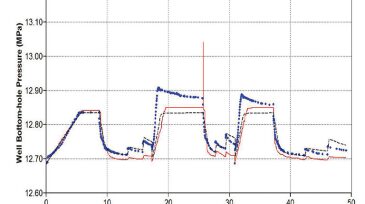
In the complete paper, a new assessment of the WAG-hysteresis model, which was developed originally for water-wet conditions, was carried out by automatic history matching of two coreflood experiments in water-wet and mixed-wet conditions.
-
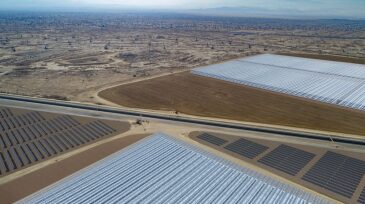
If proven economic, solar EOR technology could represent an environmentally and energy friendly solution for California’s heavy oil producers.
-
Early field tests suggest chemical treatments may be able to significantly increase production from unconventional formations.
-
The objective of the complete paper is to present an integrated work flow that can be used to build P90, mean, and P10 type wells, which represent the range of potential outcomes for the geologic subset in an unconventional resource play.
-
In the complete paper, the authors present a novel methodology to model interwell connectivity in mature waterfloods and achieve an improved reservoir-energy distribution and sweep pattern to maximize production performance by adjusting injection and production strategy on the well-control level.