Reservoir

As Egypt’s largest oil and gas investor, Eni is ramping up its 2026–2027 drilling campaign with new investments cross the Mediterranean offshore, Nile Delta, Western Desert, and offshore Sinai to strengthen the country’s role as a regional gas and LNG export hub.

The industry is no longer short of measurements; the real challenge is converting them into timely reservoir decisions that protect value. That challenge is becoming more urgent as the industry depends increasingly on mature fields and existing infrastructure. The selected papers show how this need is being addressed across different producing regions.

This paper presents a case study from a mature field redevelopment project where pulsed neutron logging was integrated with advanced reservoir modeling to improve the understanding of fluid-contact dynamics and optimize new horizontal well placement.
-
 The leaders of US oil and gas companies in Texas and neighboring states cite regulatory uncertainty, tariffs, and volatile prices as drags on activity.
 -
The SPE International Hydraulic Fracturing Technology Conference and Exhibition opens with calls to adapt technology while addressing regional realities.
-
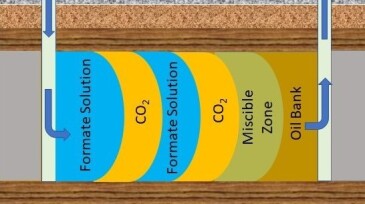
In a study that applied alternative carbon carrier technology to enhanced oil recovery (EOR) scenarios, researchers at The University of Texas at Austin found that the new method recovered up to 19.5% more oil and stored up to 17.5% more carbon than conventional EOR methods.
-
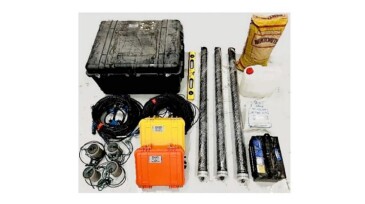
This study assesses the advantages, constraints, and necessary enhancements of both passive and active electromagnetic techniques in the context of carbon capture and storage.
-
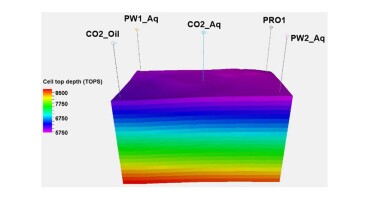
This paper presents a novel workflow with multiobjective optimization techniques to assess the integration of pressure-management methodologies for permanent geological carbon dioxide storage in saline aquifers.
-
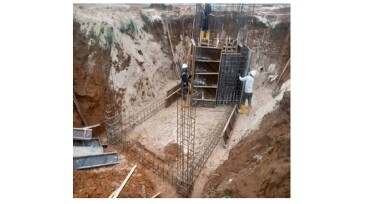
This paper reviews lean construction management processes adopted in the Apani Field development, from facility design to construction management and drilling-location preparation.
-
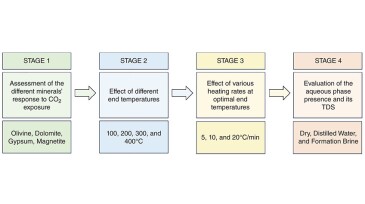
This paper presents a novel methodology for assessing the rapid mineral carbonation of carbon dioxide through geochemical interactions with carbon-, magnesium-, and iron-rich minerals abundant in geological formations.
-
Casing deformation has emerged as a major challenge in China’s unconventional oil and gas fields, prompting the development of new solutions to address the issue.
-
The US supermajor is using one of its lowest-value hydrocarbon products to generate double-digit production increases in its most prolific US asset.
-
The transaction adds 267,000 net acres and nearly 140,000 BOE/D from Vital Energy, lifting Crescent into the top 10 largest US independents.