Safety

As drilling operations become increasingly digital, computer vision is emerging as a continuous safety layer that complements, not replaces, established safety practices. The challenge is no longer whether artificial intelligence can detect hazards, but how operators should deploy, integrate, and govern these systems to improve safety without adding operational comple…

This paper presents a competency-centered, data-driven approach implemented to strengthen control-room emergency-response capability through a cloud-hosted, scenario-based virtual plant simulator.

From AI-enabled walking rigs to subsea drones and autonomous inspection robots, robotics is rapidly moving from pilot projects to field deployment. The technology promises not only greater efficiency but also a fundamental shift in how the industry approaches safety and asset management.
-
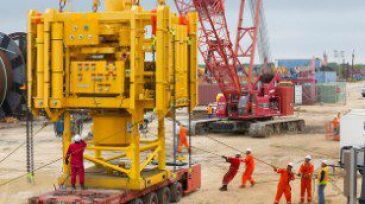
 Oil and gas firms may be exposed to significant unseen long-term costs in their procurement of health and safety equipment.
 -
In both developed and developing countries, noise is regarded as the most common occupational hazard in various industries. The present study aimed to examine the effect of sound pressure level on serum cortisol concentration in three different times during the night shift.
-
Cutting-edge computing and subsea wireless camera technology deployed on a pipeline construction project enhanced diver safety and generated significant cost savings by avoiding the need for additional subsea vessels.
-
New methodology addresses underlying issues to achieve more-sustainable process-safety and HSE performance.
-
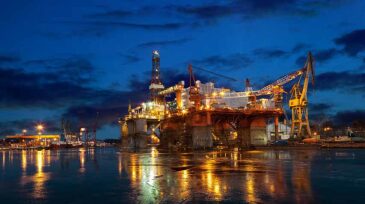
The people in the offshore oil and gas industry have an expectation that they can work each day with zero harm to their safety or the environment. The Ocean Energy Safety Institute and the Research Partnership to Secure Energy for America have teamed up to create a roadmap to reach this goal.
-
"I have some patients whose symptoms I can’t explain," physician Ulrike Meyer said, describing nosebleeds, rare cancers, and respiratory illness among a dearth of data.
-
The oil and gas industry is marking 10 years since a Bond Super Puma helicopter came down 12 miles off the coast of Peterhead, Scotland, killing all 14 passengers and two crew members.
-
A partnership between ConocoPhillips, Marathon Oil, and XTO Energy has resulted in the opening of a new clinic catering to the safety and health of oil and gas employees in Carlsbad, New Mexico.
-
A new networked checkpoint tower system has been designed specifically for remote oilfield work sites. The system keeps track of human and vehicle flow, enhancing operational safety and aiding in enforcement of company policies.
-
Natural Resources Minister Siobhan Coady says the government is open to the idea of an independent safety regulator for the province’s offshore oil and gas industry but is not currently working toward implementation.