Safety

Shell has demonstrated drone-in-a-box operations from its Mars floating production unit, becoming the first operator in the region to secure FAA approval for self-approved offshore beyond-visual-line-of-sight flights. JPT Senior Technology Editor Jennifer Pallanich visited Shell Technology Center Houston to see the system in action.

SPE’s newly renamed Safety Technical Section expands the reach of human factors by integrating safety, risk management, and system resilience expertise while preserving dedicated leadership and technical focus.

As drilling operations become increasingly digital, computer vision is emerging as a continuous safety layer that complements, not replaces, established safety practices. The challenge is no longer whether artificial intelligence can detect hazards, but how operators should deploy, integrate, and govern these systems to improve safety without adding operational comple…
-
 Many oil and gas workers can operate as lone workers. Fortunately, there are technologies that can help protect isolated and remote employees.
 -
The workplace has changed since 2020. Previous safety strategies are now obsolete. We must change our approach to meet the new realities of today. If we don't, anticipate broader organizational challenges in the days ahead.
-
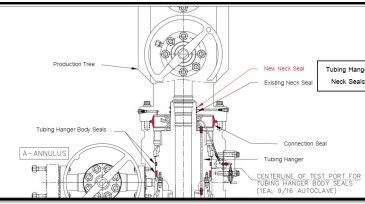
After a barrier was breached in an offshore gas well, the well was made safe by closing a primary barrier. An investigation then revealed the root cause of the failure and led to a solution that safely brought the well back online.
-
One expert says there needs to be a transfer of safety culture from the traditional energy industry to the newer offshoot of renewables.
-
While personal protective equipment has not traditionally had the technological capabilities to help prevent worker injury due to human error, the latest safety innovations, such as gas detection wearables, can help provide visibility and data-driven insights.
-
To explore motor vehicle safety, the agency is conducting interviews with workers as well as focus groups with managers and supervisors.
-
Where health, safety, and environmental efforts are focused must create value for the organization.
-
This paper’s proposal is based on the need to communicate commands, requests, affirmations, and more with precision and accuracy. Creating an architecture for rig communications is essential for the next generation of engineers and operators to work more safely and more efficiently.
-
A recent report released from the National Academies of Sciences, Engineering, and Medicine shows improvement in measurement and management of systemic risk in Gulf of Mexico oil and gas operations but adds that progress lags in some areas.
-
A study from the International Association of Oil and Gas Producers shows the value of eye-tracking in well control operations.