Safety

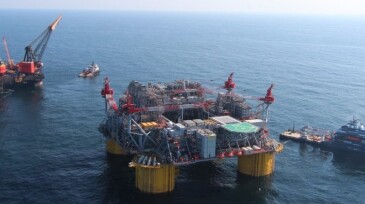
Shell has demonstrated drone-in-a-box operations from its Mars floating production unit, becoming the first operator in the region to secure FAA approval for self-approved offshore beyond-visual-line-of-sight flights. JPT Senior Technology Editor Jennifer Pallanich visited Shell Technology Center Houston to see the system in action.

SPE’s newly renamed Safety Technical Section expands the reach of human factors by integrating safety, risk management, and system resilience expertise while preserving dedicated leadership and technical focus.

As drilling operations become increasingly digital, computer vision is emerging as a continuous safety layer that complements, not replaces, established safety practices. The challenge is no longer whether artificial intelligence can detect hazards, but how operators should deploy, integrate, and govern these systems to improve safety without adding operational comple…
-
 HiberHilo will be used to monitor remote oil and gas wells in Papua New Guinea, providing real-time performance and safety data.
 -
Together in Safety’s recent report “Future Fuels Risk Assessment” uses operational scenarios across industries to evaluate the safety implications of using methanol, LNG, hydrogen, and ammonia as fuel.
-
The International Association of Oil and Gas Producers has published its annual safety report for 2021. The report shows an increase in fatalities to 20 from 14 in 2020.
-
A longer-than-expected repair period following the 8 June explosion could strand 2 Bcf/D of natural gas in the US.
-
Technology (and a tight hiring market) are eliminating surveillance in commercial trucking.
-
The Bureau of Safety and Environmental Enforcement is proposing regulations that would improve operational safety, human health, and environmental protections offshore, while providing clarity to industry regarding the bureau's review of projects proposing to use new or unusual technology, including equipment used in high-pressure/high-temperature environments.
-
KLX Energy Services was cited for exposing workers to explosion hazards.
-
Offshore oil and gas workers who regularly practice mindfulness may experience less fatigue and emotional and psychological strain, according to a study led by researchers at the University of Houston.
-
A new gas-gathering rule that has been issued by the US Department of Transportation's Pipeline and Hazardous Materials Safety Administration will soon expand oversight to all onshore gas-gathering pipelines, including about 425,000 miles of lines that had not previously been documented in annual reporting.
-
This paper presents an optimization project that was implemented in the Khazzan and Ghazeer fields of Oman to optimize the post-fracturing cleanup and testing period to reduce hydrocarbon flaring and CO2 emissions as well as the testing cost without compromising the overall well cleanup and testing objectives.