Safety

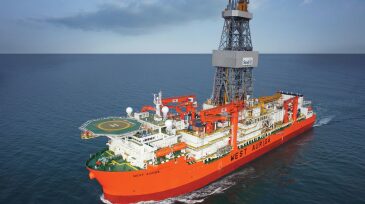
Shell has demonstrated drone-in-a-box operations from its Mars floating production unit, becoming the first operator in the region to secure FAA approval for self-approved offshore beyond-visual-line-of-sight flights. JPT Senior Technology Editor Jennifer Pallanich visited Shell Technology Center Houston to see the system in action.

SPE’s newly renamed Safety Technical Section expands the reach of human factors by integrating safety, risk management, and system resilience expertise while preserving dedicated leadership and technical focus.

As drilling operations become increasingly digital, computer vision is emerging as a continuous safety layer that complements, not replaces, established safety practices. The challenge is no longer whether artificial intelligence can detect hazards, but how operators should deploy, integrate, and govern these systems to improve safety without adding operational comple…
-
 A new networked checkpoint tower system has been designed specifically for remote oilfield work sites. The system keeps track of human and vehicle flow, enhancing operational safety and aiding in enforcement of company policies.
 -
Natural Resources Minister Siobhan Coady says the government is open to the idea of an independent safety regulator for the province’s offshore oil and gas industry but is not currently working toward implementation.
-
HSE data is ever growing, especially in high-risk industries. So, how can you apply data science and artificial intelligence to help see beyond current practices and gain even greater insights into safety data?
-
The US Occupational Safety and Health Administration, the National Institute for Occupational Safety and Health, the State of North Dakota, and the Bakken Basin Safety Consortium have signed an alliance to protect employees and promote safety and health in the oil and gas industry.
-
Seadrill has announced implementation throughout its fleet of a health program designed for employees before they leave for work on one of the company’s rigs.
-
Recommended Practice 54, "Occupational Safety and Health for Oil and Gas Well Drilling and Servicing Operations," provides procedures for promoting and maintaining safe and healthy working conditions for personnel in drilling and well servicing operations.
-
Workers in specific settings and activities are at increased risk for certain infectious diseases. When an infectious disease case occurs in a worker, investigators need to understand the mechanisms of disease propagation in the workplace.
-
The TRITON/TRISIS/HatMan malware incident proved that the worlds of process safety and industrial control systems should be looked at holistically, not just from the standpoint of potential cyberthreats.
-
The North Dakota Petroleum Council is introducing One Basin—One Way, a program that hopes to reduce orientation redundancies and streamline training.
-
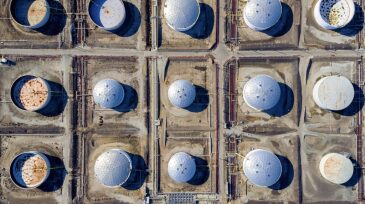
The need to optimize tank turnaround schedules is as great as it has ever been within the midstream sector, but traditional human-based tank inspections often cut into uptime while introducing safety risks. New robotic applications aim to alleviate these issues.