Safety

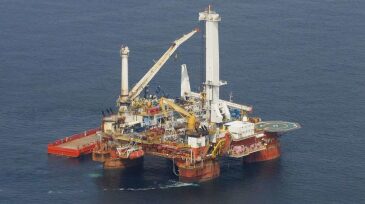
Shell has demonstrated drone-in-a-box operations from its Mars floating production unit, becoming the first operator in the region to secure FAA approval for self-approved offshore beyond-visual-line-of-sight flights. JPT Senior Technology Editor Jennifer Pallanich visited Shell Technology Center Houston to see the system in action.

SPE’s newly renamed Safety Technical Section expands the reach of human factors by integrating safety, risk management, and system resilience expertise while preserving dedicated leadership and technical focus.

As drilling operations become increasingly digital, computer vision is emerging as a continuous safety layer that complements, not replaces, established safety practices. The challenge is no longer whether artificial intelligence can detect hazards, but how operators should deploy, integrate, and govern these systems to improve safety without adding operational comple…
-
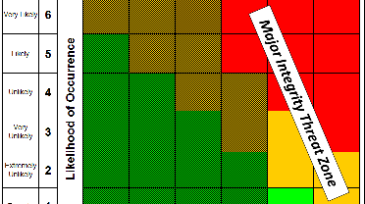
 The Technical Integrity Management System is a means of ensuring that the people, system, processes, and resources that deliver technical integrity are in place, in use, and fit-for-purpose throughout the whole life cycle of the assets, to avoid major accidents while meeting production objectives.
 -
The National Institute for Occupational Safety and Health is collaborating with partners in industry, government, academia, and labor and with other stakeholders to achieve successful and sustainable outcomes to improve worker safety and health across the oil and gas extraction industry.
-
Recent advancements in wearable technologies have opened multiple avenues for innovation. The oil and gas industry can make use of the smart watch, in particular, to monitor the health of oilfield workers.
-
Bad bosses are costing their companies billions as they burn out their employees.
-
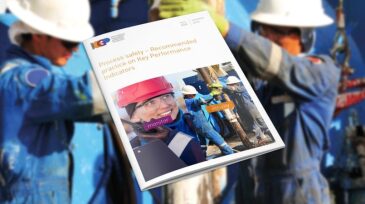
The International Association of Oil and Gas Producers recently released the second edition of Report 456, Process Safety—Recommended Practice on Key Performance Indicators. The report provides guidance on identifying leading and lagging process-safety KPIs for the upstream oil and gas industry.
-
Levels of stress and mental health problems among UK workers are at a 17-year high, according to the latest injury and ill health statistics published by the Health and Safety Executive.
-
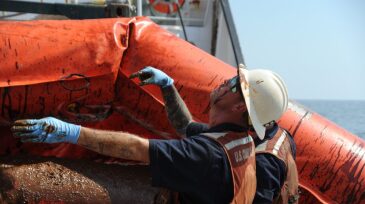
The response to the 2010 Deepwater Horizon oil spill was affected by heat. This paper evaluates the association between environmental heat exposure and self-reported heat-related symptoms in US Coast Guard Deepwater Horizon disaster responders.
-
Offshore oil and gas drillers need to better protect against spills during disruptions such as hurricanes and power outages, the American Petroleum Institute recommended.
-
Wearable devices can notify workers of hazards, provide useful safety data to employers, and improve safety on the worksite.
-
The tool, called the Field Analysis of Silica Tool, works with commercially available Fourier-transform infrared analyzers to determine a worker’s exposure to respirable crystalline silica dust, providing detailed results immediately following a worker’s shift.