Safety

Shell has demonstrated drone-in-a-box operations from its Mars floating production unit, becoming the first operator in the region to secure FAA approval for self-approved offshore beyond-visual-line-of-sight flights. JPT Senior Technology Editor Jennifer Pallanich visited Shell Technology Center Houston to see the system in action.

SPE’s newly renamed Safety Technical Section expands the reach of human factors by integrating safety, risk management, and system resilience expertise while preserving dedicated leadership and technical focus.

As drilling operations become increasingly digital, computer vision is emerging as a continuous safety layer that complements, not replaces, established safety practices. The challenge is no longer whether artificial intelligence can detect hazards, but how operators should deploy, integrate, and govern these systems to improve safety without adding operational comple…
-
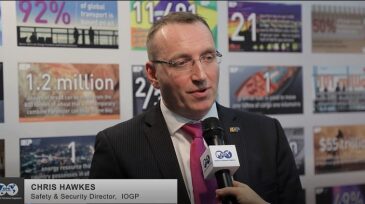
 Chris Hawkes, safety and security director for the International Association of Oil and Gas Producers, spoke with reporter Eithne Treanor at the 2018 SPE International Conference and Exhibition on Health, Safety, Security, Environment, and Social Responsibility, which was held in Abu Dhabi.
 -
Determining the best way to meet the needs of colleagues and employers, as well as enlisting them to help meet goals, takes effective listening.
-
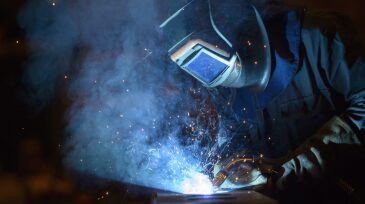
Welding produces miscellaneous gases and particles that have various effects on respiratory systems, and long-term exposure may result in "welder's lung." The aim of this study is to describe radiological findings of welders' lung.
-
Nighttime environmental noise affects sleep quality. However, the effects of daytime occupational noise remain unclear.
-
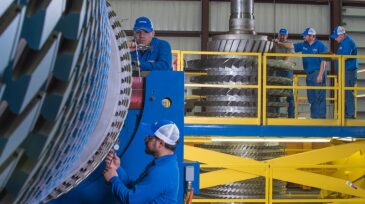
Sulzer’s Houston Service Center has passed a major milestone in its safety record, operating for more than 3 years without a lost-time incident (LTI).
-
Effective Prevention of Tuberculosis Transmission in Oil and Gas Workplaces: A Programmatic ApproachIntegrating a tuberculosis (TB) control program into existing operation systems has provided a sustained approach for effective and efficient prevention of TB transmission in the workplace.
-
This paper presents a scientific method for reducing fatigue risks in oil and gas organizations that operate a slowly rotating shift schedule.
-
Getting to Zero and Beyond: The Path Forward, sets the stage for continuing the discussion across the industry of the essential steps the industry must take to sustain zero harm.
-
This paper examines the use of injury rates as a key performance indicator (KPI). It argues that, as a KPI, injury-frequency rate is no longer a valid measure.</p>
-
One of the more difficult hurdles to overcome when developing a safety leadership culture is getting front-line employees to understand the full weight of their role in stop-work authority.