Safety

Shell has demonstrated drone-in-a-box operations from its Mars floating production unit, becoming the first operator in the region to secure FAA approval for self-approved offshore beyond-visual-line-of-sight flights. JPT Senior Technology Editor Jennifer Pallanich visited Shell Technology Center Houston to see the system in action.

SPE’s newly renamed Safety Technical Section expands the reach of human factors by integrating safety, risk management, and system resilience expertise while preserving dedicated leadership and technical focus.

As drilling operations become increasingly digital, computer vision is emerging as a continuous safety layer that complements, not replaces, established safety practices. The challenge is no longer whether artificial intelligence can detect hazards, but how operators should deploy, integrate, and govern these systems to improve safety without adding operational comple…
-
This paper aims to provide a fresh perspective on the pivotal role of integrity leadership and the needed to deliver the journey to goal zero, no harm and no leaks.
-
The principle objective of this research, initiated by the Petroleum Safety Authority, has been to improve the knowledge of safety-relevant indicators in the petroleum industry, in particular related to validity, effectiveness, and reliability.
-
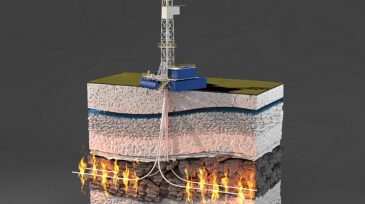
 Stanford geoscientists have found a way to detect thousands of tiny tremors around hydraulic fracturing operations that could serve as predictors of eventual larger earthquakes.
 -
The Norwegian model for managing safety in the petroleum sector may seem complicated. The Petroleum Safety Authority has produced an educational guide to the safety regime.
-
The objective of this study was to estimate the economic burden of lung cancer and mesothelioma from occupational and paraoccupational asbestos exposure in Canada.
-
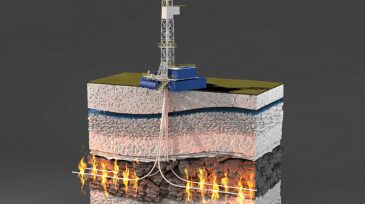
Stanford geoscientists have found a way to detect thousands of tiny tremors around hydraulic fracturing operations that could serve as predictors of eventual larger earthquakes.
-
More than a year ago, Ramanan Krishnamoorti and his team at the University of Houston started working on a predictive model that could alert oil and gas company employees when a problem might arise—and how to mitigate it.
-
Workers exposed to extreme cold or who work in cold environments may be at risk for cold-related illnesses and injuries.
-
Australia’s peak body for lung health professionals is demanding a national response after hearing that work-related lung diseases are on the rise.
-
In response to a Presidential Order to reduce undue burden on industry, the Bureau of Safety and Environmental Enforcement has completed a comprehensive review of the Production Safety Systems regulations.