Safety

Shell has demonstrated drone-in-a-box operations from its Mars floating production unit, becoming the first operator in the region to secure FAA approval for self-approved offshore beyond-visual-line-of-sight flights. JPT Senior Technology Editor Jennifer Pallanich visited Shell Technology Center Houston to see the system in action.

SPE’s newly renamed Safety Technical Section expands the reach of human factors by integrating safety, risk management, and system resilience expertise while preserving dedicated leadership and technical focus.

As drilling operations become increasingly digital, computer vision is emerging as a continuous safety layer that complements, not replaces, established safety practices. The challenge is no longer whether artificial intelligence can detect hazards, but how operators should deploy, integrate, and govern these systems to improve safety without adding operational comple…
-
How much value are you obtaining from your safety communication and training efforts?
-
 The American Society of Safety Engineers (ASSE), the world’s oldest professional safety organization, has crafted an “OSHA Reform Blueprint” that details its priorities and vision for the Occupational Safety and Health Administration (OSHA) in a time of political change.
 -
An audit of the Martin Linge project was conducted by the Petroleum Safety Authority Norway (PSA) on 28–30 March 2017. This was directed at technical safety, electrical equipment, maintenance management, and Total’s own follow-up of technical barriers during the commissioning phase.
-
Behind the use of most drones and unmanned aerial vehicles is the issue of safely and legally operating beyond the visual line of sight (BVLOS). Jim Cieplak talks about his work with Harris Corporation and BVLOS solutions.
-
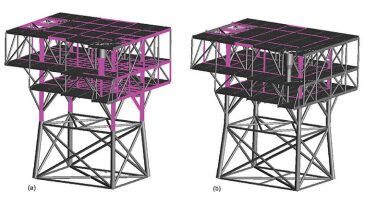
Applying sufficient passive fire protection (PFP) on topside structural-steel members is critical. Simplified and conservative approaches are available to estimate the extent and amount of PFP necessary.
-
Current methods for external inspection of floating assets on station use divers or remotely operated vehicles (ROVs), but these methods incur high safety, people-on-board (POB), and cost penalties. New methods to eliminate diving are being developed.
-
The SPE technical director of Production and Facilities discusses the role process and occupational safety play in oil and gas operations.
-
Various incidents that took place between Transocean, the owner of Deepwater Horizon, and BP, the company that leased the rig for use at Macondo, illustrate the gap between work-as-imagined in the drilling program and work-as-done by the well operations crew.
-
With the US Bureau of Safety and Environmental Enforcement as a cochair of the steering committee, SPE held a 2-day summit in April to discuss the development and implementation of an industrywide safety-data sharing framework.
-
Awareness of the different styles of thinking can provide an understanding of the choices people make when assessing risk and making decisions. The purpose of this paper is to show how such knowledge can be operationalized and applied to real-world oil and gas operations.