Safety

Shell has demonstrated drone-in-a-box operations from its Mars floating production unit, becoming the first operator in the region to secure FAA approval for self-approved offshore beyond-visual-line-of-sight flights. JPT Senior Technology Editor Jennifer Pallanich visited Shell Technology Center Houston to see the system in action.

SPE’s newly renamed Safety Technical Section expands the reach of human factors by integrating safety, risk management, and system resilience expertise while preserving dedicated leadership and technical focus.

As drilling operations become increasingly digital, computer vision is emerging as a continuous safety layer that complements, not replaces, established safety practices. The challenge is no longer whether artificial intelligence can detect hazards, but how operators should deploy, integrate, and govern these systems to improve safety without adding operational comple…
-
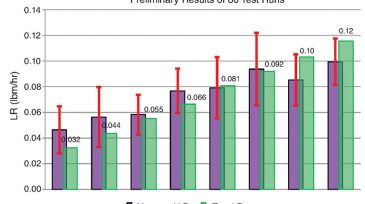
 Optical gas-imaging is effective for visual identification of volatile organic compound (VOC) leaks. But it doesn't currently quantify the leak rate as required by regulations. This paper discusses work aimed at adding that quantification.
 -
Risk-taking behavior is an important contributing human factor to incidents and is notoriously difficult to influence. This study examined how safety measures and uncertainty affected the risk-taking behavior of participants.
-
This paper explores whether factors other than the driver can be influenced to increase overall driving safety. This is an application of the risk management approach of using fundamental design and layout to reducing the likelihood and severity of incidents.
-
Safety culture can be distilled into nine characteristics predictive of safety outcomes. To improve safety performance and create lasting change in organizational culture, leaders can focus on developing 10 safety-specific leadership capabilities.
-
DNV’s new training center will run full-scale experiments for a joint industry project aimed at investigating cost-efficient explosion load descriptions for process areas.
-
When panels in an instrument equipment shelter kept tripping and the occasional smell of H2S led to an investigation of the rationale. Although a rare occurrence, this paper presents a strategy for prevention through careful site selection.
-
For the more than 7 billion people on our planet, every measure of quality of life, from gross domestic product per capita and infant mortality, to education levels and access to clean water, is correlated to the consumption of modern fuels, including oil and gas.
-
Analyzing accidents can demonstrate how much they have in common with everyday operations. Business principles and sound engineering practices can be at odds.
-
Despite a number of recent and high-profile jetliner crashes, commercial aviation has entered into a new era of safety. There is a lot the oil and gas industry can learn from their success.
-
This paper presents a technique that results in an occupied structure being located properly and constructed to reduce the risk of harm to the occupants to a tolerable level.