Safety

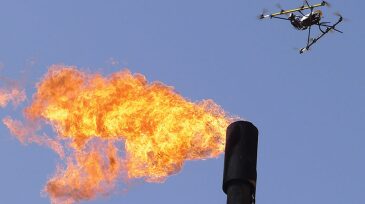
Shell has demonstrated drone-in-a-box operations from its Mars floating production unit, becoming the first operator in the region to secure FAA approval for self-approved offshore beyond-visual-line-of-sight flights. JPT Senior Technology Editor Jennifer Pallanich visited Shell Technology Center Houston to see the system in action.

SPE’s newly renamed Safety Technical Section expands the reach of human factors by integrating safety, risk management, and system resilience expertise while preserving dedicated leadership and technical focus.

As drilling operations become increasingly digital, computer vision is emerging as a continuous safety layer that complements, not replaces, established safety practices. The challenge is no longer whether artificial intelligence can detect hazards, but how operators should deploy, integrate, and govern these systems to improve safety without adding operational comple…
-
 Unconventional resources offer many substantial benefits, yet the rapid increase in production of these resources using hydraulic fracturing has generated scrutiny by some policymakers and advocates who cite health concerns.
 -
Every process plant presents a high number and diversity of valves that control the flow of feedstock, products, and service liquids and gases.
-
Industrial accidents rarely occur because of failures in design. More often, they occur because operators make faulty decisions while under stress or because they do not follow sensible maintenance procedures.
-
Human error is identified as a root cause of accidents and incidents in 60% to 80% of the cases and a causal factor in another 50% to 60% of all mishaps across many industries.
-
I was an employee of Union Carbide Corp. (UCC), and like other employees, I know exactly where I was when I first heard the news. Analyzing the root cause of this horrible accident provides insight and opportunities to learn from the mistakes that led to Bhopal.
-
Human factors may be a trendy term, but human habits are the targets in effecting change in behaviors related to performing work safely. Recent research around what habits are, how they are formed and changed and how they affect our lives has important implications for creating a safety culture.
-
Passive fire protection (PFP) has been used as a method to avoid/delay global collapse of offshore installations. Location of PFP is often based on simplistic assumptions, standards, guidance, and methods that do not always consider the real response of the structure to fire.
-
Over its 27-year history, the Center for Chemical Process Safety (CCPS) has observed that the first step toward implementing a strong process-safety-management program is obtaining top-management commitment.
-
The Abnormal Situation Management (ASM) Consortium performed a root-cause analysis on 32 incident reports gathered from public documents and member companies.
-
Unmanned aircraft are finding their place in the oil and gas industry by providing aerial geologic modeling to address reservoir-related challenges and making inspections safer.