

Safety

Shell has demonstrated drone-in-a-box operations from its Mars floating production unit, becoming the first operator in the region to secure FAA approval for self-approved offshore beyond-visual-line-of-sight flights. JPT Senior Technology Editor Jennifer Pallanich visited Shell Technology Center Houston to see the system in action.

SPE’s newly renamed Safety Technical Section expands the reach of human factors by integrating safety, risk management, and system resilience expertise while preserving dedicated leadership and technical focus.

As drilling operations become increasingly digital, computer vision is emerging as a continuous safety layer that complements, not replaces, established safety practices. The challenge is no longer whether artificial intelligence can detect hazards, but how operators should deploy, integrate, and govern these systems to improve safety without adding operational comple…
-
 Process safety is attaining a higher profile in the energy business. I think we are continuing our safety journey and improving our practices and fluency, moving beyond personal safety into integration as a core part of the project, facilities, and construction (PFC) landscape.
 -
This paper reviews the key areas for facility designers and engineers to include when designing facilities to ensure safe facilities. Use and incorporation of the principles outlined in this paper should enable engineers and designers to build safe facilities that reduce the risk of major incidents.
-
Although offshore disasters are rare, they have resulted in significant loss of human life, environmental damage, and negative impacts on the larger society. We vow to learn from them, and address the technical challenges, but less often explore the role of culture, such as safety culture.
-
Minimizing HSE Impacts During Design and Construction of a Major Gas Pipeline Through the Baltic SeaDuring the design of two parallel gas pipelines from Russia to Germany through the Baltic Sea, major design changes were made to minimize project impacts, resulting in rapid approval by all five affected countries.
-
Recent accidents in the oil and gas industry have renewed interest in whether behavioral sciences can provide insights that can be translated into safety interventions.
-
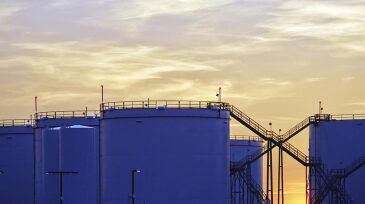
This paper addresses a “conceptual model” for an overfill-protection program, based on a recent industry example. Key portions of the programmatic and overfill-equipment aspects will be addressed.



Page 66 of 66