Safety

Shell has demonstrated drone-in-a-box operations from its Mars floating production unit, becoming the first operator in the region to secure FAA approval for self-approved offshore beyond-visual-line-of-sight flights. JPT Senior Technology Editor Jennifer Pallanich visited Shell Technology Center Houston to see the system in action.

SPE’s newly renamed Safety Technical Section expands the reach of human factors by integrating safety, risk management, and system resilience expertise while preserving dedicated leadership and technical focus.

As drilling operations become increasingly digital, computer vision is emerging as a continuous safety layer that complements, not replaces, established safety practices. The challenge is no longer whether artificial intelligence can detect hazards, but how operators should deploy, integrate, and govern these systems to improve safety without adding operational comple…
-
 Leadership engagement is needed to drive health and safety performance in a world of work in an increasing state of flux, according to a survey conducted by ERM.
 -
Developing strong relationships within a leadership team is paramount for fostering collaboration, effective decision-making, and a positive organizational culture.
-
In the pursuit of eliminating serious injuries, illness, and fatalities, Shell has transitioned from its 12 life-saving rules to the nine established by the International Association of Oil and Gas Producers. This paper explains the context of the Life-Saving Rules and why Shell decided to transition, providing an overview of how it managed the change, the effects so …
-
This article explains 10 focus necessities and provides a guide on gathering perspectives from key stakeholders to prioritize an improvement plan or create a more robust safety improvement strategy.
-
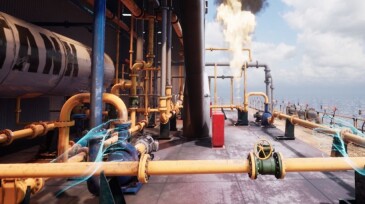
This paper aims to demonstrate how virtual reality, a technology that gives the user an immersive 3D experience, is being used as part of major-accident-hazard awareness training and how this has been sustained to provide an innovative, powerful method of ongoing workforce engagement.
-
The free virtual meeting plans to highlight state-of-the-art knowledge on improving safety culture and human/organizational performance in the oil field.
-
This article describes how leadership involvement in office and site visits can support and sustain an outstanding safety culture and outlines added benefits of conducting office and site visits.
-
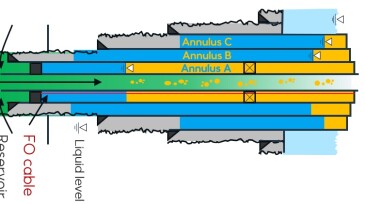
Distributed fiber-optic sensing data from distributed temperature sensing and distributed acoustic sensing can be used to monitor annuli liquid levels in production wells, further allowing calculation of leak rates and inference of leak path.
-
From January 2015 to July 2022, the Occupational Safety and Health Administration received reports of 2,101 severe injuries among oil and gas extraction workers. Contract workers in the service and drilling subindustries experienced disproportionately more work-related injuries compared with those in the operation subindustry.
-
Incorporating technology with items worn on the person, intelligent systems become a part of everyday personal protective equipment, enhancing safety without disrupting operations.