Safety

Shell has demonstrated drone-in-a-box operations from its Mars floating production unit, becoming the first operator in the region to secure FAA approval for self-approved offshore beyond-visual-line-of-sight flights. JPT Senior Technology Editor Jennifer Pallanich visited Shell Technology Center Houston to see the system in action.

SPE’s newly renamed Safety Technical Section expands the reach of human factors by integrating safety, risk management, and system resilience expertise while preserving dedicated leadership and technical focus.

As drilling operations become increasingly digital, computer vision is emerging as a continuous safety layer that complements, not replaces, established safety practices. The challenge is no longer whether artificial intelligence can detect hazards, but how operators should deploy, integrate, and govern these systems to improve safety without adding operational comple…
-
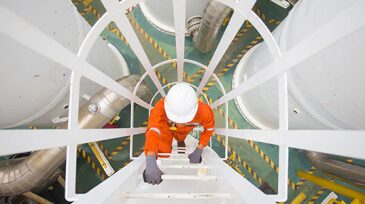
 The fatality rate for oil and gas workers is seven times higher than other industries, according to the Centers for Disease Control and Prevention.
 -
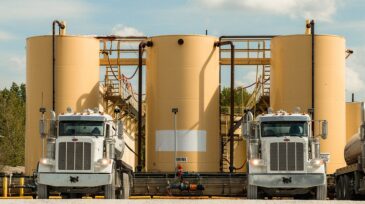
Oil and gas wells produce nearly a trillion gallons of toxic waste a year. An investigation shows how it could be making workers sick and contaminating communities across America.
-
A partnership between academic researchers and two energy companies will build new evidence-based tools to enhance safety by examining whether simple exercises designed to increase mindfulness can reduce the risks.
-
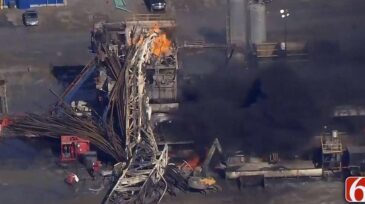
Two years ago, an oil well near a small Oklahoma town exploded into a fireball that swept through a drilling rig, killing five in an accident deemed a needless catastrophe by investigators and casting a short-lived spotlight on a lack of regulation and oversight across the oil and gas industry.
-
The Gulf Research Program of the National Academies of Sciences, Engineering, and Medicine announced the grant awards for eight projects focused on strengthening safety culture in the offshore oil and gas industry.
-
Safety analytics derived from virtual-reality data can quantify workers’ ability to sense physical hazards and be used to achieve a safer workplace and generative safety culture.
-
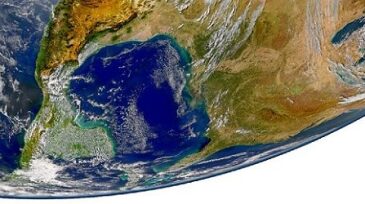
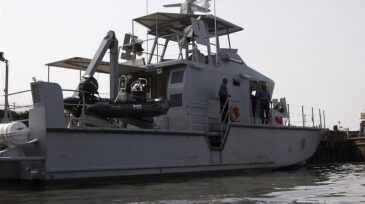
The nonprofit group Oceans Beyond Piracy says the cost of maritime piracy in West Africa was more than $800 million in 2017.
-
Twenty safety and health leaders from various industries were asked to give their predictions on the trends they see most affecting occupational health and safety in 2020 and beyond, and several themes emerged.
-
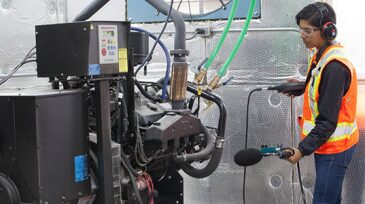
Managing noise exposure is complex in terms of accurately assessing sound levels, identifying and ranking the dominant noise sources, and finding effective control solutions.
-
Despite having some of industry’s most hazardous working environments, a sector that pioneered the adoption of digital technology has been slow to exploit artificial intelligence and machine learning in the area of health and safety.