Offshore/subsea systems

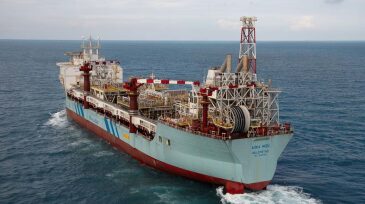
Shell has demonstrated drone-in-a-box operations from its Mars floating production unit, becoming the first operator in the region to secure FAA approval for self-approved offshore beyond-visual-line-of-sight flights. JPT Senior Technology Editor Jennifer Pallanich visited Shell Technology Center Houston to see the system in action.

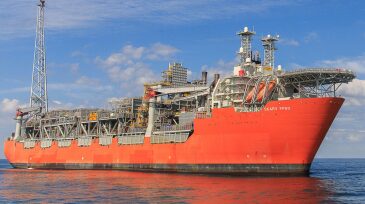
This paper explores the application of a modular, high-temperature gas-cooled nuclear reactor to a Very Large Crude Carrier-class floating production, storage, and offloading vessel.

This paper describes the potential of combined-cycle technology (use of a gas turbine and a steam turbine together to turn fuel into electricity) in offshore carbon-capture applications.
-
 When two engineers lost their jobs during the industry downturn, they used the misfortune as an opportunity to develop an innovative concept that aims to make it a lot easier to move subsea gas long distances.
 -
Subsea 7 completed the acquisition of Siem Offshore Contractors along with a cable-lay vessel and a support vessel.
-
Aquabotix’s SwarmDiver technology marks a major milestone in the growing trend toward swarm-deployed underwater vehicles.
-
We don’t include a structure like the Eiffel Tower with separators, pumps, and compressors on the top observation platform in an onshore development plan. And yet, how many jacket platforms are there around the world?
-
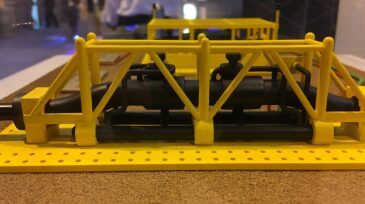
Subsea pumps are used for gas/liquid separation, subsea compression, and subsea boosting. Solutions aiming at cost reductions are crucial to make subsea processing projects feasible. A cost- and complexity-reduction solution for the subsea electrical power supply is a critical consideration.
-
Operator or manufacturer’s reports and published papers are reviewed and a criterion is developed for subsea pump selection.
-
Production from an offshore Angola field has been decreasing because of subsea pressure declines amid water-cut increases and limited gas compressor capacity. The development process leading to the selection of high-boosting multiphase pumps is described.
-
Currently, the state of the art for subsea well control is based on hydraulic technology. Hydraulic fluid is supplied from a host facility to the subsea wells through dedicated tubes within an umbilical and is distributed to the wells.
-
Hurricane Energy is still on pace for first oil in 2019 for the Lancaster field, which may lead to more significant development in the UK North Sea.
-
The steel pipe manufacturer agrees to deliver outer pipes for pipe-in-pipe flowlines for a pair of recently-announced Aker BP projects in the Norwegian Sea.