

Offshore/subsea systems

This paper describes the successful deployment of flexible coiled tubing technology in an oil-producing well of the offshore Frade field in Brazil’s Campos Basin.

This paper describes the use of encapsulated polymer technology to address the issues of shear degradation and injectivity integrity faced in the application of polymer flooding in an offshore development context.

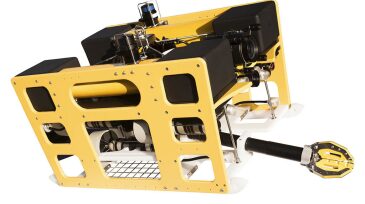
New technical papers suggest advanced robotic systems may not be far away from broad adoption for a large share of offshore inspection and intervention.
-
 The market for subsea vessel operations in field development; inspection, repair, and maintenance (IRM); and subsea well intervention is expected to grow 63% during 2012 to 2016.
 -
Complexity is now a day-to-day parameter in the world of the subsea engineer. We are not developing these systems for fun; huge value is associated with maximizing recovery from these deep, remote oil and gas reservoirs.
-
Asset integrity management encompasses the design, operation, and maintenance of an asset to preserve its integrity at an acceptable level of risk throughout its operating life.
-
The OTC 2012 Spotlight on Technology awards highlighted subsea separation and boosting and subsea heavy oil and water separation technologies in deep water.
-
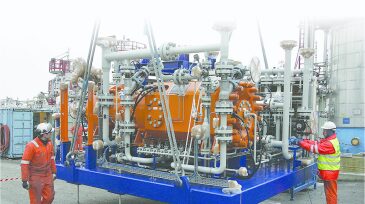
After approximately 25 years of development, subsea gas compression technology has advanced to a readiness level worthy of full implementation in the North Sea.
-
This paper presents results from an ongoing research project (SINTEF 2011) on pressure-tolerant power electronics. The main goal of the research is to provide and demonstrate solutions that enable power-electronic converters to operate in pressurized environments.
-
The selection criteria for multiphase boosting options remain somewhat subjective. A comprehensive literature review into the working principles of the major pump types identified the intrinsic advantages and limitations of each technology for subsea and downhole applications.



Page 43 of 43