Offshore/subsea systems

The Absheron gas field expansion will supply additional natural gas to Azerbaijan’s domestic market and support its export commitments to Turkey, allowing Baku to stay focused on meeting its gas export obligations to Europe.

This paper presents a flexible, highly cost- and energy-efficient method of gas separation and CO₂ capture from many different gas mixtures with a large range of CO₂ concentrations.

This work introduces a novel predictive methodology combining historical metocean data with real-time riser analysis for shallow water dynamically positioned rig operations.
-
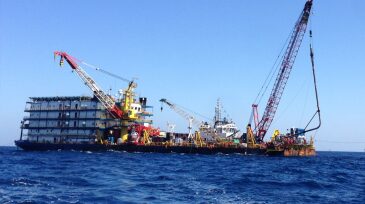
 As part of a 2-year deal, the Kreuz Glorious will help with the inspection of offshore jackets in the Arabian Sea. Kreuz will also provide personnel for project management and offshore construction.
 -
The paper provides a fast-track approach to perform screening assessment of multiple subsea concepts.
-
As the hunger for data grows, long stepouts become more common, and fiber communication becomes standard, the use of fiber in subsea oil and gas fields is set to increase.
-
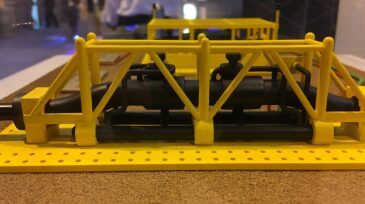
The latest entrants to tackle the development of barrier-fluid-less subsea pumps are Saipem and Curtiss-Wright Corp., who agreed to collaborate in designing and building pumps for water treatment and injection.
-
The JIP aims to bring to market a single-phase subsea boosting system that does not require barrier fluid or a mechanical seal.
-
An increasingly buzzy term tossed around at industry events, “digital twin” is leveraging data analytics, machine learning, and artificial intelligence to improve efficiencies from design to decommissioning.
-
When two engineers lost their jobs during the industry downturn, they used the misfortune as an opportunity to develop an innovative concept that aims to make it a lot easier to move subsea gas long distances.
-
Subsea 7 completed the acquisition of Siem Offshore Contractors along with a cable-lay vessel and a support vessel.
-
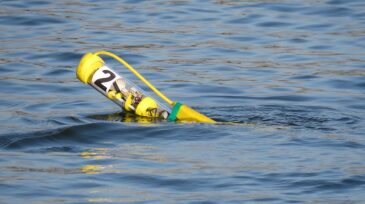
Aquabotix’s SwarmDiver technology marks a major milestone in the growing trend toward swarm-deployed underwater vehicles.
-
We don’t include a structure like the Eiffel Tower with separators, pumps, and compressors on the top observation platform in an onshore development plan. And yet, how many jacket platforms are there around the world?