Sustainability

Opening day remarks from President Mohamed Irfaan Ali framed fossil fuels and renewables as parallel systems amid rising demand and structural supply pressures.

Experts and industry leaders gathered in The Woodlands, Texas, recently to sift through the challenges of carbon capture, utilization, and storage. The puzzle is coming together, but some critical pieces are still needed before the results look like the picture on the box.

The chair of the SPE Georgetown Section outlines how balanced, apolitical dialogue can support development amid rapid energy expansion.
-
 Given companies’ track record in achieving great things, the question is not whether companies can be a force for good. The question is, why don’t all executives lead their companies to be a force for good?
 -
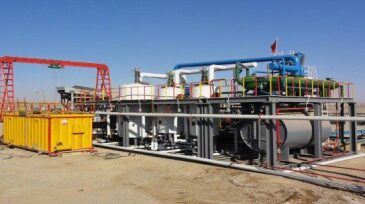
With the use of many advanced technologies, the Keshen gas field in western China was developed efficiently with no injuries and no pollution to the environment. It also significantly boosted local community development.
-
Three companies are collaborating to develop the equipment needed to make LNG a feasible alternative fuel for ship owners and operators.
-
Collaboration is critical to achieving recognition of the scope and value of carbon capture and storage and achieving acceptance for specific projects.
-
The Central Finance Board of the Methodist Church is developing a system for analyzing company ethics, and top mining and oil companies will be graded by the end of 2018.
-
Chemical demand is essential to long-term oil demand growth. However, the focus to tackle plastics waste by reducing and recycling is raising concerns on future chemical demand growth.
-
Initiative 97 would require oil and gas wells to be at least 2,500 ft away from homes and schools.
-
Relationships and engagement with communities in direct areas of influence is of paramount importance for successful exploration and production (E&P) operations.
-
The new ordinance affects oil and gas operations and is likely to be challenged in court.
-
This paper aims to evaluate the applicability of input/output analysis to local content management as a tool to assess the relationship between the Brazilian government’s local content policy and social and economic effects of investment projects in the oil and gas and shipbuilding industry.