Sustainability

Opening day remarks from President Mohamed Irfaan Ali framed fossil fuels and renewables as parallel systems amid rising demand and structural supply pressures.

Experts and industry leaders gathered in The Woodlands, Texas, recently to sift through the challenges of carbon capture, utilization, and storage. The puzzle is coming together, but some critical pieces are still needed before the results look like the picture on the box.

The chair of the SPE Georgetown Section outlines how balanced, apolitical dialogue can support development amid rapid energy expansion.
-
 Tom Knode, director of health, safety, and environment for Athlon Solutions, discusses the oil and gas industry’s power to build sustainable communities and improve the lives of people in areas of operation.
 -
Recently, IPIECA, the United Nations Development Program, and the International Finance Corporation held a webinar to present their shared understanding of the United Nations’ sustainable development goals for the oil and gas industry.
-
Shale gas is one of least sustainable options for producing electricity, according to new research from The University of Manchester, which considered environmental, economic, and social sustainability factors.
-
Companies are more active than ever in pursuing sustainability to align with values and engage stakeholders, a new survey shows. To see financial returns, though, integrating sustainability into core functions is key.
-
The Research Partnership to Secure Energy for America (RPSEA) has released its Technology Roadmap, a plan that outlines the challenges and research needs of the US onshore and offshore oil and gas industry for the coming decade.
-
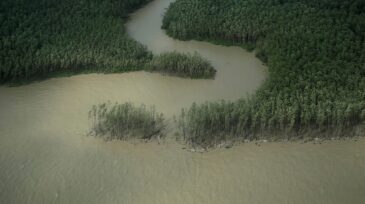
Oiapoque, surrounded by mangroves and close to a recently discovered 600-mile reef, is divided over what BP and Total might bring and what they might destroy.
-
Bowing to pressure from shareholders and the Paris international climate accord, Royal Dutch Shell pledged on 28 November to increase its investment in renewable fuels and to cut its carbon emissions in half by 2050.
-
At the 2013 G8 leaders’ summit in Northern Ireland, Canada announced that it would take action to enhance the transparency of payments to governments made by Canadian extractive companies by introducing mandatory reporting. The resulting legislation came into force on 1 June 2015.
-
Ceres, a sustainability nonprofit organization, issued a report on 14 September titled "Lead From the Top: Building Sustainability Competence on Corporate Boards." The report posits that company boards must be sustainability-competent in order to achieve long-term financial performance goals.
-
The Extractive Industries Transparency Initiative has little impact on the US domestic oil and gas industry but has been transformative in some parts of the world. So why did the US pull out?