Water management

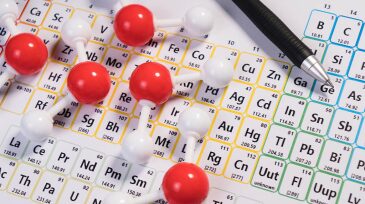
The startup company’s Midland Basin demonstration plant, located in the Permian Basin, takes a major step toward commercialization by proving its direct lithium extraction technology can refine battery-grade lithium carbonate from produced water under multiple 24/7 production cycles.

This paper presents an approach to the identification, selection, and implementation of initiatives for sustainable water management, withdrawal reduction, and water valorization.

Disposal wells remain the lowest-cost solution for produced water, but concerns over seismicity and long-term sustainability are accelerating interest in alternatives.
-
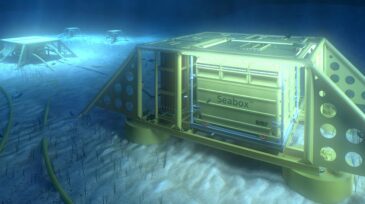
 Operators are looking for ways to better handle water coming from subsea wells, which is typically treated at topside facilities. Subsea separation systems are not equipped to discharge water back into the reservoir, so how do companies close the gaps?
 -
The report details information obtained during the EPA’s outreach to stakeholders. The information in the report will help the EPA determine whether any future actions are appropriate to address oil and gas extraction waste water further.
-
Oilfield wastewater disposal volumes are expected to double in the Permian Basin within the next 2 to 3 years, a new analysis from global energy intelligence firm Wood Mackenzie shows.
-
A growing sector of water midstream companies is in the Permian Basin looking to take advantage of a business opportunity borne out of rising produced water volumes. Billion-dollar valuations for these companies in the near future could become a reality.
-
Frac water disinfection experts become De Nora service arm in the unconventional oil and gas market.
-
Operators in the Permian Basin are looking for new ways to handle the rising volumes of produced water coming out of the region without using saltwater disposal wells. One solution, treatment for discharge, could provide an efficient alternative.
-
Three papers selected from 2018 SPE ATCE look at the challenges and approaches to the treatment of increasing volumes of produced water.
-
Management of produced water is driving subtle yet potentially consequential changes in certain regions. Contributing factors for seismicity and well pressurization, while different, share some elements. By assessing these common elements, partial risk profiles for both conditions can be assessed.
-
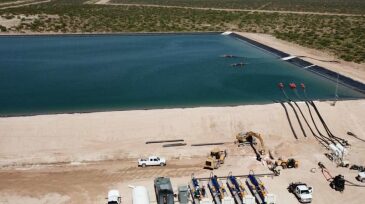
Sourcing water for hydraulic fracturing, and disposing of produced water, are constraints and significant cost items in the Permian Basin. Some of the produced water can be treated and reused by using a water life cycle approach..
-
Volatile organic compounds (VOCs) present in crude oil can be released to the atmosphere from storage tanks, waste waters, and equipment leaks. A pilot-scale sequential biotrickling/biofiltration unit was designed and tested for removal of VOCs from a wastewater sump.