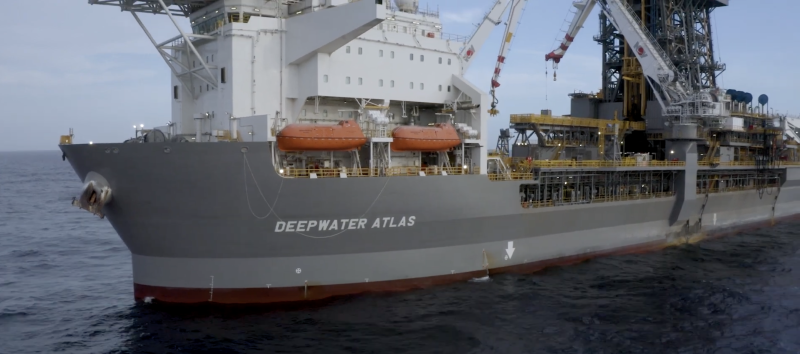
Transocean is buying Valaris in a $5.8-billion all-stock deal, ushering the merged company into an expected multiyear upcycle in offshore drilling.
The companies announced the deal, which has an enterprise value of $17 million and estimated pro forma market capitalization of $12.3 billion, on 9 February.

“We see this as a highly strategic and well-timed acquisition that will deliver substantial value as we head into what we believe is a multiyear upcycle in offshore drilling,” Keelan Adamson, Transocean president and CEO, said during an investor briefing about the transaction. “Forecasts call for a 150% increase in deepwater project sanctioning by the year end 2027. Our combined fleet will be clearly differentiated to meet this demand.”
The combined company’s reach will extend “across new and attractive geographies” while personnel, processes, and assets will enable better project delivery and economics, he said.
The combined company’s fleet of 73 rigs will include 33 ultradeepwater drillships, nine semisubmersibles, and 31 modern jackups. It will have a backlog of about $10 billion.
In 2017, Transocean sold its jackup fleet to Borr Drilling for $1.35 billion.
Now, Adamson said, bringing Valaris’ jackup fleet into the fold will offer the merged company a “strategic presence in key shallow-water” locations. The merged company “fully intends” to continue operating the jackup fleet, he said.
“The fleets of Valaris complement our fleet greatly. We're building a driller that is able to address any requirements in all water depths across the world,” he said. “We're being able to position ourselves for this upcoming upcycle where the capex spend is going to increase across all sectors, and I really think the opportunity that's provided by the jackup fleet allows us to add more incremental cash to our business.”
During the investor briefing, Valaris CEO Anton Dibowitz called the jackups a strong contributor to cashflow.

Cinnamon Edralin, Westwood’s Americas research director, told JPT there has been talk in the market about the need for more consolidation among the offshore rig contractors in order for them to be more competitive in the current market.
“Adding the jackup fleet will give the post-merger Transocean some diversification and another line of cash flow. We may see this spur additional M&A transactions as other rig contractors seek to become more competitive with the new giant,” she wrote.
Savings and Terms
In 2025, Transocean implemented $100 million in cost saving measures, and $150 million of similar measures are in place for 2026. Adamson said he expects the acquisition to contribute a further $200 million in cost synergies by 2028. Much of that is expected to come through operational efficiencies and redundancies.
The deal is expected to close in the second half of 2026, subject to regulatory approvals, customary closing conditions, and shareholder approvals.
Under the terms of the all-stock transaction, Valaris shareholders would receive a fixed exchange ratio of 15.235 shares of Transocean stock for each common share of Valaris. Upon completion and on a fully diluted basis, Transocean shareholders would own approximately 53% of the combined company, with Valaris shareholders owning the remaining 47%.
Transocean’s Adamson will lead Transocean’s senior management team, and Jeremy Thigpen will serve as executive chairman of the board, which will consist of nine current Transocean directors and two current Valaris directors. Transocean will remain incorporated in Switzerland, with its primary administrative office in Houston.
Valaris was formed through the merger of Ensco and Rowan Companies, which was announced in late 2018. Valaris filed for Chapter 11 bankruptcy protection in 2020 and emerged from it in 2021.