


The SPE A Peer Apart award recognizes those dedicated individuals involved in the review of 100 or more papers for SPE Journal.
Peer review is an essential part of scientific publishing and helps to ensure the information contained in a journal is well supported and clearly articulated. Volunteers who commit their time to reviewing papers make substantial contributions to the technical excellence of our industry’s literature. Each year, SPE typically draws on the expertise of more than 1,400 reviewers who contribute over 3,500 reviews for SPE Journal. These committed volunteers come from a variety of backgrounds, including academia, service and operator companies, and consultancies from around the world.
Peer review is a demanding and time-consuming task. Over time, the individuals receiving this honor have volunteered hundreds of hours to the Society, making SPE journals a valuable resource to authors and the industry. It is an outstanding accomplishment for those who reach the milestone of reviewing 100 papers.
This year, 11 individuals joined this elite group, bringing the total number of A Peer Apart honorees to 246 dedicated members.
Please join us in congratulating the 2026 honorees.
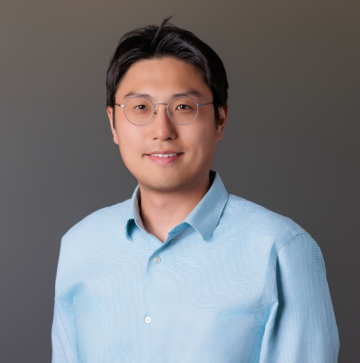
Jaewoo An is a geomechanics specialist at the Geomechanics Center of Excellence within Chevron's subsurface organization. In his current role, he leads and supports projects involving 4D mechanical earth models for subsurface integrity assessments, including fault stability, wellbore stability, and induced seismicity. His expertise spans numerical coupled flow-geomechanics modeling with fractures, coupling strategy analysis, well-control simulator development, analytical heat transfer modeling, and machine learning-based surrogate modeling. Jaewoo holds MS and PhD degrees in energy resources engineering from Seoul National University and Stanford University, respectively. Prior to pursuing his PhD, he worked at HD Hyundai Heavy Industries, contributing to solar panel manufacturing and offshore platform design. In addition to his technical contributions, Jaewoo serves as an associate editor for the SPE Journal and has been an active technical reviewer for several years. He has also chaired technical sessions at the Unconventional Resources Technology Conference (URTeC) for the past 3 years.

Torsten Clemens is a senior reservoir engineering advisor at OMV exploration and production. He earned a PhD from the University of Tübingen and began his career with Shell in 1997, working on heavy oil, EOR, fractured reservoirs, field optimization, and CO₂ geological storage. He joined OMV in 2005, where he has contributed to a broad range of subsurface technologies, including agent‑assisted field development planning, implementation of EOR processes, fractured‑reservoir development, geothermal applications, CO₂ geological storage, and underground hydrogen storage.
Clemens has published more than 160 technical papers and serves as a reviewer for 20 journals. He has received multiple professional recognitions, including the SPE IOR Pioneer Award, SPE Distinguished Member, six SPE Outstanding Reviewer Awards, and two best paper awards. He served as SPE Distinguished Lecturer in 2018–2019 and again in 2023–2024. From 2011 to 2019, he chaired the IEA EOR Technology Collaboration Program and chaired the SPE EuropEC Conference in 2021. He has lectured at Stanford University and the Mining University of Leoben and contributes to several SPE conference committees. He can be reached at: linkedin.com/in/torsten-clemens-5a3a7216/

Zhiqiang Fan is an associate professor at Northwestern Polytechnical University. He received his PhD in mechanical engineering from the University of Maine. His research focuses on fracture and fault mechanics, poromechanics, and coupled multiphysics processes in subsurface energy and environmental systems. He has more than 20 years of experience investigating the deformation, fracture, and failure of geological materials under coupled thermal, hydraulic, mechanical, and chemical conditions.
His current research interests include fracture mechanics, geological carbon storage, enhanced geothermal systems, hydraulic stimulation, wellbore stability and integrity, and the analytical and numerical modeling of porous and fractured media. He has authored or coauthored more than 50 scientific publications and has extensive experience reviewing manuscripts for top international peer-reviewed journals. He currently serves on the editorial boards of Geofluids and Energy Exploration & Exploitation. He is committed to supporting the scientific community through rigorous peer review and editorial service.
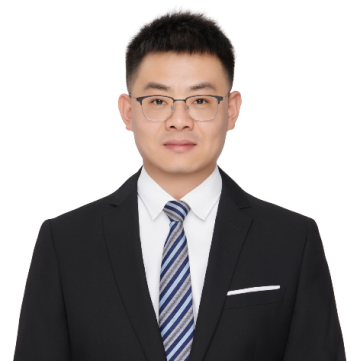
Jiajia Gao earned his PhD in petroleum engineering from China University of Petroleum (Beijing) in 2017, followed by a postdoctoral research fellowship at the National University of Singapore (NUS) (2018–2019). He is currently an associate professor of petroleum engineering at Southwest Petroleum University, where he primarily teaches courses in drilling and completion engineering. His research centers on petroleum geomechanics, specializing in poromechanics to formulate advanced multiphysics-coupled constitutive models and derive rigorous semi-analytical solutions, addressing critical wellbore stability and integrity challenges in petroleum, geothermal, and gas hydrate reservoirs. He has authored over 30 peer-reviewed journal articles and the monograph Wellbore Stability and Integrity. Gao actively serves the academic community as an associate editor for SPE Journal and Geoenergy Science and Engineering, and is a member of the ASCE EMI Poromechanics Committee and SPE. He was recognized with the SPE Outstanding Technical Reviewer Award in 2025. He can be reached at yiyingtuoli@163.com.
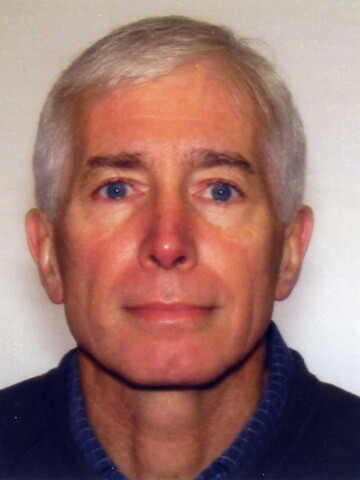
Kes Heffer received an MA in natural sciences from the University of Cambridge in 1970 and an MSc in petroleum reservoir engineering from Imperial College, London in 1971. He worked for BP for 29 years, initially in worldwide operations as a petroleum/reservoir engineer, and later in research in reservoir description. Since 1999, he has been an Honorary Fellow of the (now) Institute of GeoEnergy Engineering at Heriot-Watt University, Edinburgh, and has conducted research and consultancy work through Reservoir Dynamics Ltd. His current main research interest is the role of faults, fractures, and geomechanics in reservoir fluid-flow processes, and the degree to which these approach a critical point.

Sarath Ketineni is a senior reservoir engineer who leads reservoir engineering for the light oil portfolio at Wafra Joint Operations in Kuwait. With more than 12 years of global upstream experience, he brings deep expertise in asset development, reservoir management, waterflood optimization, and reservoir simulation. His prior roles span technology scouting for Chevron Technology Ventures, managing a gas EOR pilot in the Permian Basin, CO₂ asset management, and reservoir simulation consulting that supported capital-intensive projects and delivered measurable value.
Sarath holds PhD (2015) and MS (2012) degrees in petroleum and natural gas engineering from Penn State and MBA and a B.Tech. degrees in chemical engineering (2008) from IIT Madras. He is an active SPE contributor, serving as an ATCE session chair (2020–2026), held multiple board roles with the SPE YP Gulf Coast Section, chaired the SPE GCS Data Analytics Study Group, served as an eMentor, and judged several student paper contests. A recognized peer reviewer, he received SPE Journal’s Outstanding Technical Reviewer Award. His honors include SPE Houston Young Engineer of the Year, Gulf Coast Section service awards, and recognition as an SPE The Way Ahead Energy Influencer.

Kenneth R. Kibodeaux has served as chief technology officer at Renascent Energy since 2020, focusing on geothermal and EOR in shale targets, and earning US Department of Energy project awards. He previously was a petroleum engineering consultant at Aramco Research Center in Houston and spent 14 years with Shell, first in the Netherlands on the international ARMUR team (Advanced Recovery Methods & Unconventional Resources), and then in Houston developing EOR processes for oil shale. Prior to Shell, Kibodeaux was with Texaco E&P Technology supporting its worldwide heavy-oil business. He also served in graduate internships at Shell Bellaire Research Center and Mobil E&P Technical Center. Author/inventor of dozens of papers/patents, he has over 30 years of experience in technology development and global deployment in thermal recovery, foam EOR, gas/water injection EOR, rock and fluid analysis and modeling, reservoir simulation, heavy oil, and shales. Kibodeaux is an SPE Distinguished Member who served two terms on the SPE Journal Editorial Board and was awarded Outstanding Technical Editor during each term. He holds BS, MS, and PhD degrees in petroleum engineering from The University of Texas at Austin.
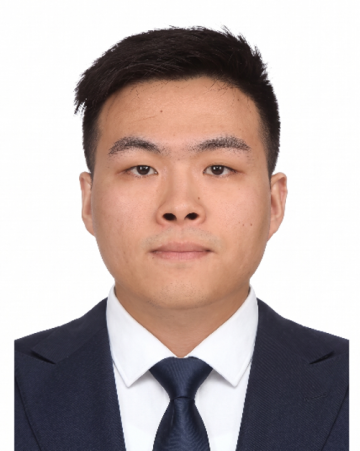
Yongzan Liu is a professor at China University of Petroleum (East China). He previously served as a postdoctoral research fellow and senior research scientist at Lawrence Berkeley National Laboratory and Schlumberger-Doll Research, respectively. His research centers around energy geomechanics, with a specialized focus on coupled thermo-hydro-mechanical modeling of subsurface fractured reservoirs, distributed fiber-optic sensing data interpretation for hydraulic fracture monitoring, production performance of enhanced geothermal systems, and geological carbon storage. Currently, his work emphasizes integrating advanced numerical modeling with monitoring techniques to better characterize and understand the complex processes in subsurface reservoirs. He holds a granted US patent, has coauthored one book, and has published over 30 technical papers, including 15 in SPE journals, alongside numerous presentations at SPE conferences. He is a two-time recipient of the SPE Technical Reviewer Outstanding Service Award (2021, 2025) and serves as an associate editor for both the SPE Journal and Geoenergy Science and Engineering.
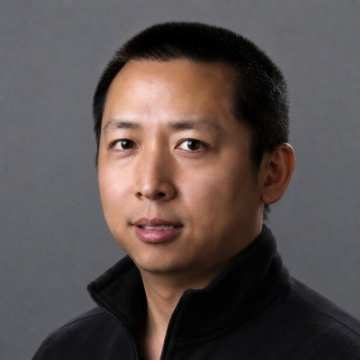
Meng Meng is a staff scientist at Los Alamos National Laboratory, specializing in cement and well integrity, multiphysics geomechanics testing, and subsurface energy engineering. His research focuses on the performance of wellbore materials and geologic formations under high-pressure and high-temperature conditions, with applications to geothermal energy, oil and gas production, carbon capture and storage, and underground energy storage.
Meng serves as an associate editor for SPE Journal and Geoenergy Science and Engineering and has contributed extensively as a technical reviewer for peer-reviewed journals. He has led and supported research programs sponsored by the US Department of Energy, the US Environmental Protection Agency, and multiple industry partners. He received his PhD in petroleum engineering from The University of Tulsa and has been recognized with the SPE Outstanding Technical Editor Award, ARMA Future Leader, LANL Early Career Award, and other professional honors.

Ashok Santra is a highly accomplished senior scientist at Aramco Americas whose more than 3-decade career exemplifies sustained technical excellence, innovation, and service to the energy industry. His pioneering contributions in smart materials, drilling fluids, and cementing technologies have delivered field-ready solutions that improve operational performance and advance industry practice. With over 100 patents, more than 100 peer-reviewed publications, an h-index of 41, and over 5,000 citations, Santra’s work demonstrates exceptional scientific impact and global recognition.
Beyond his technical achievements, Santra has shown outstanding leadership and professional service. He has served as chairperson of the SPE Southwest Oklahoma Section and associate editor for SPE Drilling & Completion and SPE Journal, and he currently serves on the SPE RDTS Advanced Materials board and multiple international award committees. His innovations have earned multiple awards from Halliburton and Aramco; SPE Outstanding Technical Editor recognition in 2018 and 2019; SPE Outstanding Associate Editor in 2024, along with the SPE Gulf Coast Regional Service Award in 2024. Educated at IIT Kharagpur and the Indian Institute of Science, with research appointments at the University of Cambridge and Texas A&M University, Santra continues to inspire excellence through technology innovation, mentorship, and service to the global engineering community.
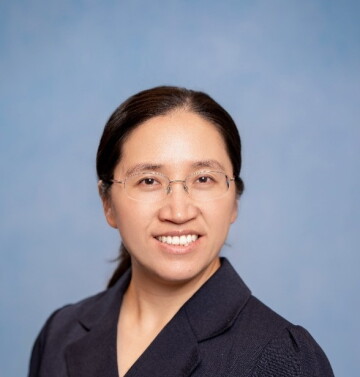
Kan Wu is a professor and Class of '75 DVG Career Development Professor in the Harold Vance Department of Petroleum Engineering at Texas A&M University. Her research interests include distributed fiber-optic sensing for subsurface monitoring, hydraulic fracture modeling, monitoring and optimization, and hybrid physics and data-driven modeling. Wu has authored or coauthored more than 120 technical papers, which have been cited more than 7,000 times (Source: Google Scholar). She is a founder and director of Advanced Geomechanics Fracture & Reservoir Application Consortium (AGFRAC) at Texas A&M University. Wu received the 1987 Karen E. Olson and the Louis H. Turner Faculty Award for Excellence in Research in 2023. She also received the SPE Gulf Coast North America Region Completions Optimization and Technology Award in 2024 and the Production and Operations Award in 2026. She was selected as an SPE Distinguished Lecturer for the 2023–2024 term and named a Chancellor’s EDGES Fellow in 2024. Wu earned her PhD in petroleum engineering from The University of Texas at Austin.