

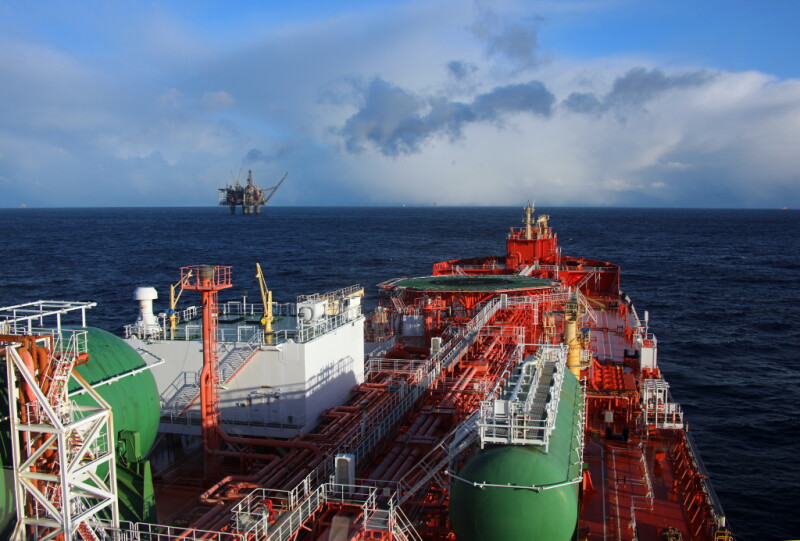
Equinor’s Gullfaks field has delivered its 5,000th oil cargo to Sweden, a milestone that the Norwegian major says demonstrates that mature fields on the Norwegian Continental Shelf remain a reliable source of energy supply for Europe.
“Reaching 5,000 oil cargoes from Gullfaks is the result of long-term efforts to further develop the field,” Gullfak’s Production Director Gunnar Egge said in a recent press release. “Several mature fields on the Norwegian Continental Shelf, such as Gullfaks, benefit from well-developed infrastructure and high-quality reservoirs. Through targeted investment and continuous improvement, we continue to increase recovery, extend field life, and ensure stable deliveries to our customers in Europe.”
Gullfaks entered production in 1986 with expectations it would produce until 2007. Twenty years later, it is still shipping cargos to international markets, with most volumes going to Europe. Over its lifetime, Gullfaks has produced around 2.8 billion BOE—nearly twice as much as originally estimated, Equinor said in its release.
The field is also an oil export hub for oil from the Snorre and Visund fields, as well as several subsea developments in the area.
Sweetening High-Margin Products
Because Gullfaks crude is light and low in sulfur, it is well-suited for refineries in Sweden, the UK, and Poland for processing into high-margin products including gasoline, diesel, and jet fuel, plus LPG and naphtha for the petrochemical industry. Equinor also occasionally delivers to its own refinery at Mongstad.
Shuttle tankers with volumes of approximately 800,000 bbl are used in transporting cargos from the Norwegian Continental Shelf to European customers.
“Shuttle tankers are the result of close and long-term collaboration between Equinor, shipping companies, and maritime specialists,” Heidi Aakre, head of shipping at Equinor, said in the company release. “Together, we deliver highly reliable logistics that enable oil to be transported quickly and safely from the Norwegian Continental Shelf to our customers.”
Powered in part by electricity from the Hywind Tampen floating offshore wind farm, Gullfaks ranks as Norway’s 7th-largest oil and gas field by total resources. The country’s six largest fields are Troll, Statfjord, Ekofisk, Oseberg, Åsgard, and Johan Sverdrup.
Gullfaks’ production peaked in 1994, and in 2025 the field together with associated subsea developments, produced just over 17 million bbl of oil, according to Equinor.