Testing page for app
-
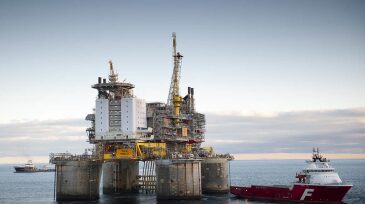
 Subsea power demand is growing to support various processing loads, including pumps and compressors. This paper presents a modular direct-current electrical-power system that is designed for use in a subsea field with medium or long step-out distance
-
Rice University has been working on effective models of phase behavior and asphaltene deposition as a path to improved design that can reduce this challenge for operators.
-
A new federal air quality rule from the United States Environmental Protection Agency (EPA) could affect how the oil and gas industry handles waste gas emissions.
-
The SPE Separations Technology Technical Section (STTS) hosted a special session titled “Unlocking Hidden Production Potential in Existing and Mature Fields” during the recent ATCE.
-
While decommissioning is not new, the need is accelerating, along with cost and regulatory requirements. A panel at ATCE discussed the challenges in executing decommissioning projects.
-
Developing performance indicators that will provide meaningful comparisons across the wide variation in oil and gas platforms is important, since good indicators can drive optimal operations. But is is also complex.
-
SPE’s New Delhi Section (SPENDsec) sponsored a field trip recently to Block RJ-ON-90/1 in the Barmer basin area in Rajasthan, India. The total area of Block RJ-ON-90/1 is approximately 3,111 km2. It covers parts of the Baitu, Barmer, and Gudamalani areas in the Barmer district and Sanchor and Bagoda in the Jalor district. This onshore block in the northwest of the cou…
-
T. Don Stacy, SPE, died on 3 October 2014 in Houston, Texas. He was 80 years old. Stacy served as SPE president in 1983 and as vice president of the American Institute of Mining, Metallurgical, and Petroleum Engineers (AIME) in 1985. Several significant events occurred during Stacy’s tenure as SPE president. In 1983, ground was broken in Richardson, Texas, for SPE’s n…
-
SPE donated USD 10,000 to the US National Foundation for the Centers for Disease Control and Prevention (known as the CDC Foundation) to aid the organization in its fight against the Ebola virus in Liberia.
-
Low-salinity waterflooding has recently attracted considerable interest from governments, researchers, and oil companies, who are evaluating the method’s potential to increase oil recovery.