Testing page for app
-
 The oil industry is currently undergoing a technological transformation that will add value, improve processes, and reduce cost. Future drilling engineers will have knowledge of robotics, automation, and organizational efficiency, which is highly appealing for recruitment.
-
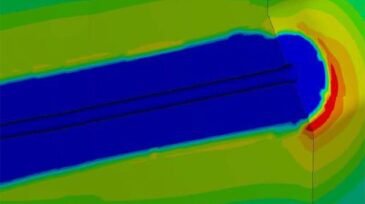
This paper discusses shale creep and other shale-deformation mechanisms and how an understanding of these can be used to activate shale that has not contacted the casing yet to form a well barrier.
-
Hydraulic isolation of wells drilled with nonaqueous fluids (NAFs) relies heavily on eliminating mud from the annuli before placing cement.
-
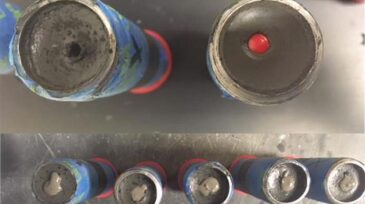
This paper demonstrates a new way to create gas-tight seals during well abandonment, overcoming the limitations of traditional methods and reducing the operator’s liability and potential environmental impact after decommissioning has been completed.
-
I am encouraged that we, as an industy, continue to refine and tweak our practices to solve zonal-isolation and cementing challenges in every well environment in which we work. As cementing techniques are improved, so, too, are the cement-evaluation methods and work flows.
-
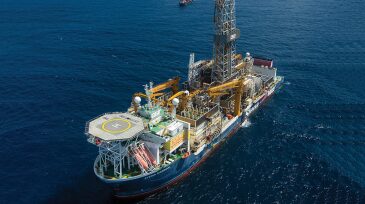
Could 2019 be a bumper year for offshore energy development?
-
A growing number of oil industry leaders are saying that data sharing across the industry is needed, but change is coming slowly.
-
Electrical-submersible-pump (ESP) technology predominates available artificial-lift options. The risk of ESP failures can be reduced greatly with the right combination of advanced technologies, such as combining artificial intelligence with a cloud-based autonomous surveillance system.
-
The developed world must no longer tolerate the buildup of mountains of waste while other places in the world, especially in underdeveloped countries, lack access to energy, food, clean water, and clean air.
-
These most recent deals bring the services company's divestiture total to $1 billion over the past 1 1/2 years.