Testing page for app
-
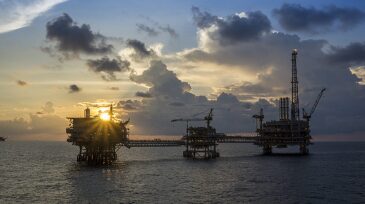
 A high-carbon-dioxide (CO2) carbonate gas field offshore Sarawak, Malaysia, is scheduled for development. Reservoirs in this region have an average clay content of 8%; more than 50% of this clay content is migratory illite, and 15% is migratory kaolinite.
-
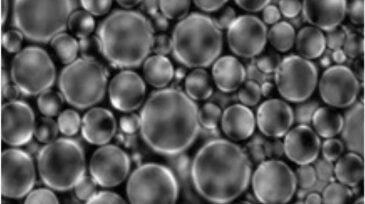
This paper describes a coreflooding program performed with sandpacks at different permeabilities, water qualities, and injection conditions.
-
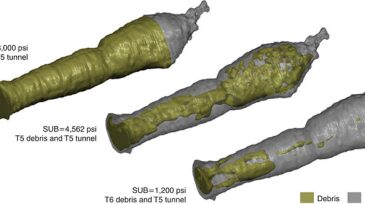
Because of inherent complexities, understanding the characteristics of perforations in downhole environments is a significant challenge. Perforation-flow laboratories have been used to provide insight into cleanup and productivity mechanisms around perforation tunnels.
-
Exxon Mobil is reorganizing and creating three new upstream companies and a global projects company.
-
Since 2011, Equinor has reduced carbon dioxide emissions from its logistical operations for the Norwegian continental shelf (NCS) by 600,000 tonnes. The company’s ambition is to halve emissions in the NCS supply chain by 2030.
-
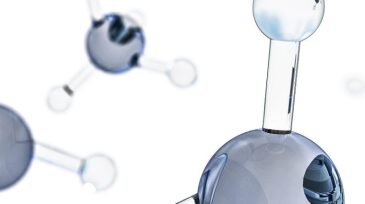
The deployment and adoption of digital technologies across the oil and gas value chain could help scale the effect of the industry’s methane-reduction efforts, finds a new report.
-
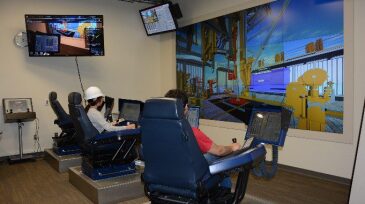
For the first time, the University of Oklahoma has offered a Human Factors in Oil and Gas Operations class. The offered course fulfilled the mission of training petroleum engineering students to make an impact on oil and gas industry.
-
Recently, Nigeria's Department of Petroleum Resources issued guidelines in furtherance of the objectives of the Flare Gas (Prevention of Waste and Pollution) Regulations, 2018.
-
When energy companies go bankrupt, the cleanup of their old oil and gas wells must take priority over paying off creditors, the Supreme Court of Canada ruled on 31 January.
-
LNG carrier Vladimir Rusanov is capable of sailing in seas with ice up to 2.1 m thick, allowing year-round transport of Yamal’s LNG to worldwide markets.