Testing page for app
-
The OGF peer review editor invites discussion on published papers and introduces the five papers in this issue.
-
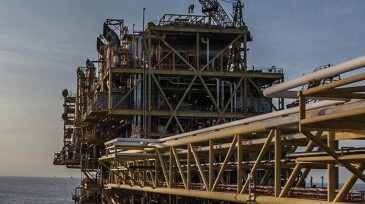
 The author muses on oil supply and demand and complexity in projects.
-
Produced water from chemical floods can cause problems for separation and water treatment equipment due to the polymers and surfactants used. Challenges are greater offshore where space limitations can affect treatment options.
-
Efficient separation assumes uniform flow, but the reality of inlet geometries can invalidate this assumption, leading to separation problems and loss of separation efficiency.
-
As the president of the SPE Foundation, I wanted to provide an update on what the Foundation is doing for SPE. Some history might be helpful to those who are unfamiliar with the Foundation and the important role it plays for SPE members worldwide.
-
SPE welcomes 99 members into the Legion of Honor, which observes 50 years of consecutive membership in the Society. Each honoree becomes dues exempt and receives a commemorative plaque marking the milestone. The honorees are listed below under their respective sections.
-
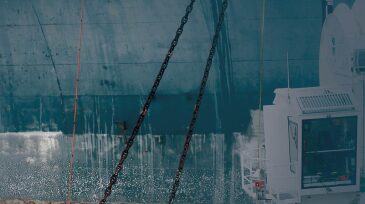
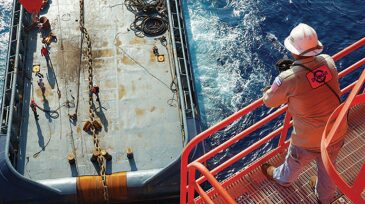
As many platforms begin to produce beyond their design life, maintenance of mooring systems becomes more critical. With redundancies in place, operators may be unaware of initial failures, which can have major consequences if another failure occurs.
-
A webinar on scrubber design explains how to enhance separation efficiency by using an inline cyclonic separator as a pre-separator upstream of the scrubber.
-
A routine maintenance project became more complicated when an ROV inspection exposed unexpected trenching that reduced the holding capacity of the system.
-
Preferential engineering adds complexity and cost. The author's manifesto focuses on simple and elegant, combined with collaboration to meet future facilities needs.