Testing page for app
-
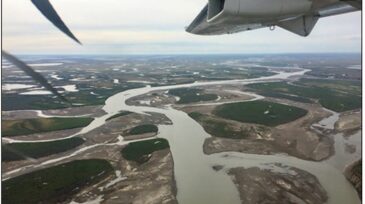
 Many forms of remote sensing imagery can be used, along with data sets and the resultant products, to improve the efficiency and safety of upstream oil and gas operations on the North Slope of Alaska.
-
SponsoredRunning casing to depth in long lateral sections is challenging, often costing operators a significant portion of pay zone at the toe of the well. This article highlights a technology that helped one operator add $120,000 to its incremental gas recovery.
-
Welcome to the debut of the Digital Data Acquisition feature. The new feature comes from the desire of readers and reviewers to broaden the scope of JPT’s coverage of developments related to digital transformation and the applications that the industry can derive from these exciting possibilities.
-
This paper describes the development and field trials of a cloud-connected, wireless intelligent completion system that enables long-term monitoring and interval control to enhance production management by connecting the user wirelessly from the desktop to downhole inflow-control valves.
-
This paper details how artificial intelligence was used to capture analog field-gauge data with a dramatic reduction of cost and an increase in reliability.
-
Major differences exist between engineering- and nonengineering-related problems. This fact results in major differences between engineering and nonengineering applications of artificial intelligence and machine learning.
-
The Arab world’s most populous country has awarded a string of concessions in a bid to become the region’s next major supplier of natural gas.
-
Digital twins are powerful combinations of models and data that “age” throughout the lifecycle of an asset as they gather and integrate data from the field. This technology is a quantum leap from earlier efforts at modeling complex systems.
-
The largest natural gas field in the rising Eastern Mediterranean region is now flowing after being discovered a decade ago.
-
The depth of the world’s offshore projects has steadily increased over the past 30 years—and so has its production base. The growth trend will continue thanks to new fields offshore Brazil, Guyana, and the US.