Testing page for app
-
 The composite upstream economic index for Texas increased for the eighth consecutive month due to a number of factors, including increased rig count, drilling permits, and upstream employment figures.
 -
No longer considered a buzz phrase, cloud computing has made converts of the largest oil companies, and now the smaller ones are next.
-
Faced with big potential discoveries under terrain that makes good seismic imaging impossible, Total is rethinking how to gather the data it needs, with an idea that could change the face of seismic exploration.
-
What are the real opportunities for disruptive step change that will help us to catch up and leapfrog other industries that have given rise to companies such as Amazon, Google, and Apple, and have driven the renewal of the auto, airline, and transportation industries?
-
A type curve is a quick way to answer a critical question—what does a typical well produce over time in a given place?
-
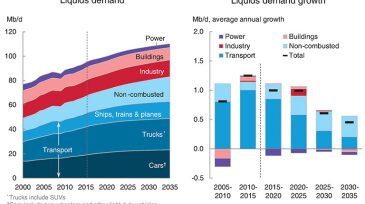
Oil demand growth from the transportation sector, the linchpin of oil consumption, will slow to a trickle by 2035 and level off, while demand from the petrochemicals sector will become oil’s chief growth driver, the BP 2017 Energy Outlook says.
-
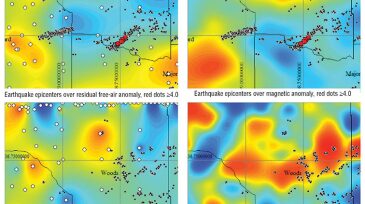
It is known that a well injecting a lot of water near a big fault can lead to earthquakes. The problem is, more often than not those faults are not known until after a tremor.
-
While many efforts are focusing on the optimization of current technologies and the study of past reservoir performance to improve future developments, with fewer capital resources and personnel available, these efforts may yield only incremental improvements.
-
The Unconventional Resources Technology Conference included discussions on emerging approaches to improving oil and gas recovery from tight rocks and exploring where the risks still lie with induced seismicity.
-
The authors discuss a new way of extracting deformation information from radar imagery, contributing to improved accuracy of InSAR surface-elevation monitoring.