Testing page for app
-
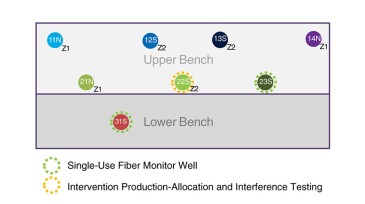
 The authors integrated azimuths and intensities recorded by fiber optics and compared them with post-flowback production-allocation and interference testing to identify areas of conductive fractures and offset-well communication.
 -
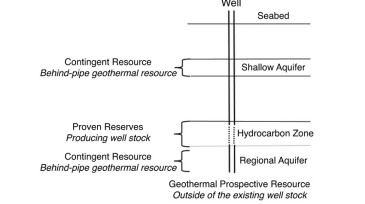
This paper provides an overview of a geothermal assessment project completed to assess geothermal energy resources in and around an operational high-pressure/high-temperature field on the UK Continental Shelf.
-
SPE President Terry Palisch is joined by Dana Otillio, vice president of SPE’s marketing and communications, to discuss how members can maximize their membership by leveraging multimedia content.
-
Majors and independents alike are targeting high-impact wells across the globe to boost future oil and gas production volumes.
-
Devon Energy along with petroleum engineering consulting and software firm Whitson and cloud computing company Snowflake developed a system to monitor the dynamics of 5,000 wells.
-
One area where the untapped potential of geothermal energy has been realized is in harnessing thermal energy from abandoned or inactive oil and gas wells. Such wells could be exploited for electricity generation or direct use through well repurposing.
-
During the past 3 years, over half a million patents were granted for production monitoring. This progress has led to a shift toward integrated work flows, cloud-based platforms, resilient sensors, process simplification, and automation.
-
The papers described here focus on novel unconventional horizontal downhole pump card signatures, carbon reduction through alternative energy to pump wells, and predicting downhole-discharge pressure of ESPs.
-
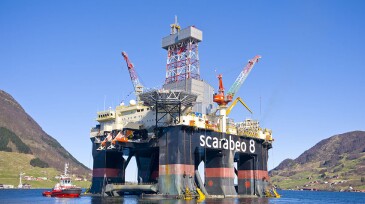
High-pressure/high-temperature (HP/HT) resources continue to be a focus of efforts to apply new technologies that maximize productivity while addressing concerns related to capital expenditure, operating expenses, and high drilling costs. These cost-effective technologies will only grow in importance in exploiting HP/HT and ultra-HP/HT fields.
-
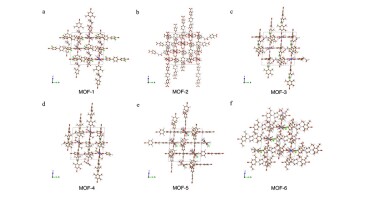
Artificial intelligence is increasingly being used to assist in the development of materials, including metal-organic frameworks (MOFs), to advance carbon capture technologies. Researchers assembled more than 120,000 new MOF candidates within 30 minutes.