Testing page for app
-
 This paper investigates novel approaches to sour-gas treatment for use in the Middle East that are outside the common oil and gas market and compares them with traditional techniques.
 -
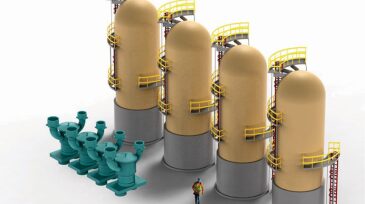
Hydrocarbon processing and treating systems often require large and elaborate surface facilities. When operating in challenging locations, such as deep water or the Arctic, these systems can be expensive. This paper discusses a new adsorption-based gas-separation technology platform.
-
Putting SPE’s revised vision into action mandates extensive collaboration and effective engagement with a wide range of internal and external stakeholders.
-
Companies are feeling reverberations in production, capacity, and inventory throughout the supply chain. But there are several ways that operators and service providers can mitigate this “bullwhip effect.”
-
Another industry report issued last month touts the coming gains in US shale, predicting that the country will soon be the largest oil producer and possibly exporter in the world.
-
In reviewing abstracts and papers for this feature, many impressive themes were evident—too many to cover in one editorial. I have commented on two: the advancements in unconventional completion design and the use of academia as a source of sophisticated completion analysis.
-
This paper uses a simulation model to evaluate and compare the thermal efficiency of five different completion design cases during the SAGD circulation phase in the Lloydminster formation in the Lindbergh area in Alberta, Canada.
-
This paper demonstrates how engineers can take advantage of their most-detailed completions and geomechanical data by identifying trends arising from past detailed treatment analyses.
-
The operator piloted a new well-completion design combining inflow-control valves (ICVs) in the shallow reservoir and inflow-control devices (ICDs) in the deeper reservoir, both deployed in a water-injector well for the first time in the company’s experience.
-
This paper covers the staged field-development methodology, including analysis and evaluation of various development concepts, that enabled the company to optimize both completion design and artificial-lift selection, reducing downtime and lowering operating costs by nearly 50%.