Testing page for app
-
 A new well intervention tool can solve annular isolation problems using a proprietary epoxy sealant placed at predefined locations, which can result in significant rig time savings. Field trial results are shared in this article.
 -
Autonomous underwater vehicles (AUVs) have demonstrated their capabilities during the search for Malaysian Airlines flight 370 in the Indian Ocean.
-
Reservoir-simulation-model inputs are numerous, and uncertainty is pervasive—before, during, and after development. With the pressure to deliver results quickly, how do we find the right balance?
-
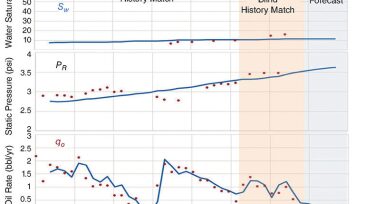
Young Technology Showcase—Top-Down Modeling: A Shift in Building Full-Field Models for Mature FieldsData-driven, or top-down, modeling uses machine learning and data mining to develop reservoir models based on measurements, rather than solutions of governing equations.
-
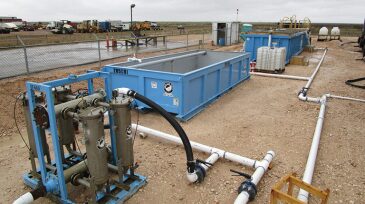
Tiny bubbles, called nanobubbles, are the focal point of a new innovation aimed at transforming produced water from a costly byproduct into a valuable asset.
-
In upstream oil and gas, cloud computing is very immature because the industry has always been challenged by storage and computational capability. However, high-performance cloud computing may create an opportunity for smaller companies lacking infrastructure for scientific applications.
-
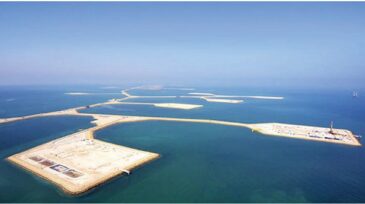
Saudi Aramco's Manifa field demonstrates that our industry can operate in harmony with the environment. Industry needs to minimize the impact of drilling and producing unconventional resources.
-
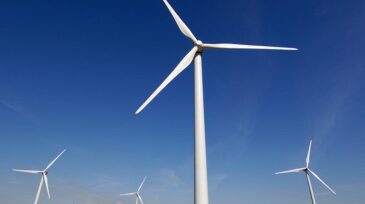
The renewable energy sector is showing strong global growth, especially wind and solar power, but oil shows no sign of losing market share in the global energy mix.
-
In this study, detailed petrophysical and geological field models focusing on the middle and lower members of the Bakken Formation were developed.
-
Carbon dioxide (CO2)/water foams are of interest for mobility control in CO2 enhanced oil recovery (EOR) and as energized fracture fluids or as hybrid processes that combine aspects of both processes.