Testing page for app
-
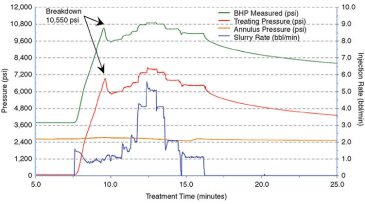
 In hydraulic fracturing, the use of diagnostic-fracture-injection tests (DFITs) can provide valuable information.
 -
Rigless coiled-tubing-unit (CTU) interventions can be effective in returning to production wells that have lost electrical-submersible-pump (ESP) efficiency because of organic, inorganic, or mixed scale deposits.
-
Calcium sulfate (CaSO4) in the form of gypsum and anhydrite is one of the more prevalent evaporite minerals typically found in the carbonate rocks of the western Canadian sedimentary basin (WCSB).
-
A surface-based torque and tension sub (TTS) was used to perform measurements while drilling several extended-reach horizontal wells.
-
The removal of mineral scale in the oil field is typically perceived as a somewhat nonscientific discipline.
-
The process of drilling a borehole is very complex, involving surface and downhole drilling systems that interact with the drilling fluid and the surrounding rocks.
-
The Fast Drill Process has become a well-known work flow to identify hole-making limiters and mitigate them through redesign to the economic limit of performance.
-
One of the interesting developments in the last few years is an emerging understanding of the need to develop the communication infrastructure for a drilling operation.
-
The drilling-systems-automation roadmap (DSA-R) initiative is a cross-industry effort launched in June 2013 to help accelerate the adoption of advancements in drilling-systems automation (DSA) for both onshore and offshore wells.
-
An ecosystem-based management program is described to assess the potential sensitivities and contribution of the platform as an artificial reef.