Testing page for app
-
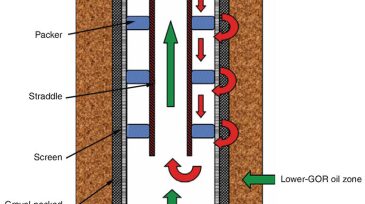
 An operator successfully executed two wireline through-tubing gas-shutoff (GSO) workovers in high-angle openhole-gravel-pack (OHGP) completions to isolate high-gas/oil-ratio (HGOR) zones, resulting in significantly increased oil production.
 -
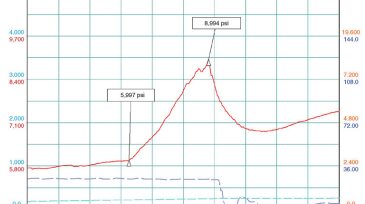
A new miniature pressure/temperature sensor comes packaged inside a tough small ball capable of traveling to the bottom of a well while drilling and returning with data on board.
-
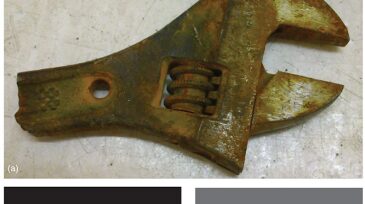
With more wells to check than tools and time to do so, a methodology to predict wells with the highest risk of corrosion was developed.
-
One approach to refracturing involves the use of mechanical diverters such as perforation balls and rock salts, which may be useful for one stage; however, cessation of pumping operations results in these diverters falling out of the perforations or dissolving.
-
One of the defining features of the 21st century will undoubtedly be the changing relationship between humans and automated machines.
-
A project to predict how much carbon dioxide injected into an oil field is likely to remain there forever set off the US Department of Energy (DOE) on a search for faster data analysis methods.
-
Expandable reamers were developed to improve efficiencies and reduce risk while drilling through problematic formations in deep water and other offshore wells, where wellbore stability is a major challenge.
-
Poor well performance and downhole failures have a significant effect on operator profitability. To combat this, operators spent nearly USD 10 billion in 2013 on time-consuming and costly well interventions to retrieve and repair completions hardware.
-
I had the opportunity to discuss the state of the art and the future of reservoir modeling and reservoir performance forecasting with one of the finest members of the reservoir engineering profession, professor Larry W. Lake, of the University of Texas at Austin (UT).
-
For US operators, new regulations from the federal government regarding hydraulic fracturing practices could not have come at a worse time.