Testing page for app
-
 In this study, a pilot plant with a capacity of 50 m3/d was used to conduct flotation, filtration, and adsorption trials for produced-water treatment at a crude-oil gathering facility.
 -
Water condensation and/or hydrate formation at the top of pipelines are serious design/operation considerations in pipelines. This paper reports the results of tests conducted in a new experimental setup constructed for investigating gas-hydrate risks in varied operational scenarios.
-
At the 2014 SPE Hydraulic Fracturing Technology Conference in February, former Texas A&M Department of Petroleum Engineering head Stephen A. Holditch received a well-deserved lifetime achievement recognition, the Legends of Hydraulic Fracturing Award.
-
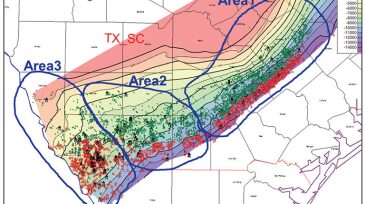
The purpose of this paper is to apply multivariate statistical modeling in conjunction with geographic-information-systems (GIS) pattern-recognition work to the Eagle Ford.
-
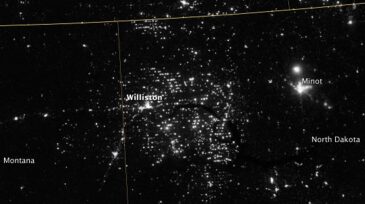
Production from the Bakken and Three Forks formations within the Williston basin is continuing to climb as a result of applied horizontal drilling and hydraulic fracturing.
-
Using large-scale hydraulic-fracturing experiments on tight shale outcrops, three dominant regions controlling stage production were identified.
-
An analysis of thousands of fracturing treatments in major plays in the United States provides insights into how fracture designs have changed over time.
-
Production engineers are facing a new challenge when trying to select optimal well-production systems (in particular artificial lift) for important, relatively new resources: liquids-rich shale and deepwater subsalt applications.
-
This paper presents an integrated modeling approach for history matching and economic optimization of wells producing from liquids-rich shale reservoirs.
-
The number of subsea wells has increased steadily to more than 5,500 by the end of 2012.