Testing page for app
-
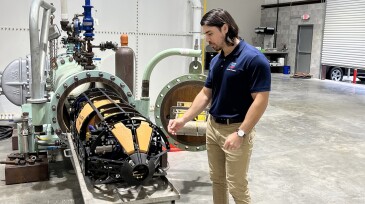
 The traditional method of inspecting tanks puts workers in danger. Using robots instead can keep workers out of harm’s way.
 -
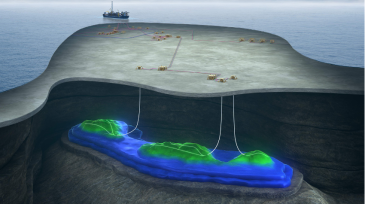
By repurposing Italy’s depleted Porto Corsini Mare Ovest offshore gas field for CO2 storage, Eni and Italian grid operator Snam have positioned the Ravenna CCS project to play a major role in the EU’s development of more than 50 mpta of CO2 storage capacity by 2030.
-
SponsoredDiscover how TAQA’s sustainable products are transforming cementing operations, reducing environmental impact, and enhancing performance.
-
Subsea tieback in the Central North Sea expected to produce 20,000 BOED at peak, boosting output to Alvheim FPSO.
-
The two projects at the Jack/St. Malo and Tahiti deepwater facilities are expected to recover millions of additional barrels of oil equivalent.
-
Academic expertise, operational experience, and knowledge gathered through trial-and-error analysis must be meshed in order to achieve the optimizations that are increasingly needed with the depletions we experience in various fields globally.
-
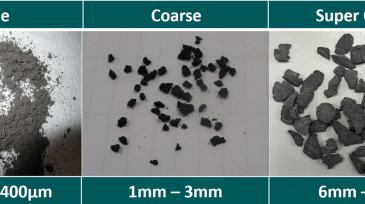
In an era marked by a growing emphasis on sustainability, industries are increasingly adopting innovative technologies. Three notable advancements are the extraction of lithium from produced water, using rhamnolipids as biosurfactants, and applying graphene nanoplatelets as scale inhibitors.
-
Offshore wind power involves generating electricity from wind farms located at sea. Because wind speeds are generally higher offshore than on land, these farms produce more electricity for the same amount of installed capacity. Both wind and solar energy are renewable and do not emit carbon, which helps reduce dependence on fossil fuels such as oil and gas.
-
Each year during its Annual Technical Conference and Exhibition (ATCE), SPE honors members whose outstanding contributions to SPE and the petroleum industry merit special distinction. Recipients will be recognized at the Annual Awards Banquet on Tuesday, 24 September.
-
Surveillance technologies have undergone a revolution, reshaping how facilities, wells, and reservoirs are monitored. These advancements not only have increased the scale at which these technologies are deployed but also have led to an unprecedented influx of data. The sheer volume of data, however, poses a significant challenge to traditional analytical methods.