Testing page for app
-
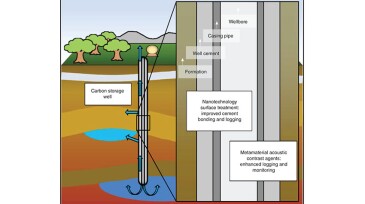
 The authors of this paper describe a suite of technologies that enables enhanced well robustness and performance modeling and monitoring of carbon storage facilities.
 -
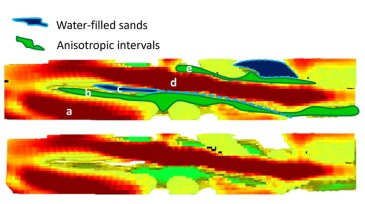
The authors of this paper describe an approach in which all available technologies are combined to improve understanding of reservoir depositional environments.
-
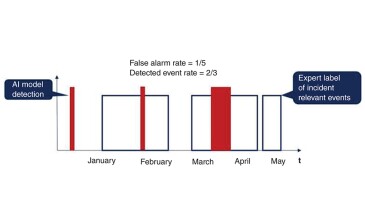
This paper presents the proof of concept of artificial-intelligence-based well-integrity monitoring for gas lift, natural flow, and water-injector wells.
-
Companies that can adapt, innovate, and stay ahead of the curve not only survive, but thrive. To achieve this, a fresh approach to innovation is required: one that harnesses the collective wisdom of customer advisory boards and prioritizes a strategy based on customer value.
-
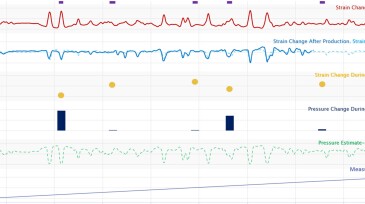
The authors of this paper describe a project in which Raleigh frequency-shift distributed strain sensing monitored during production in a far-field observation well was translated to an estimated pressure profile.
-
Updates about global exploration and production activities and developments.
-
This paper defines conditions for optimized well-diagnostics investigation and describes a rigless solutions for common well-barrier failures and lessons learned from operator field trials.
-
SPE technical papers synopsized in each monthly issue of JPT are available for download for SPE members for 2 months. These December and January papers are available now.
-
The authors of this paper describe a project aimed at automating the task of cuttings descriptions with machine-learning and artificial-intelligence techniques, in terms of both lithology identification and quantitative estimation of lithology abundances.
-
Once considered as being on the brink of abandonment, aging reservoirs are proving to be valuable assets as innovative hydrocarbon recovery techniques and re-envisioning of these fields for decarbonization opportunities are transforming them into reservoirs of opportunity.