Testing page for app
-
 Schlumberger introduced the GAIA digital exploration platform, which it says enables exploration teams to rapidly discover and access basin-scale data and manage their exploration opportunities.
-
Although OSHA does not have a specific standard that covers working in hot environments, the Occupational Safety and Health Act requires places of employment that are "free from recognizable hazards that are causing or likely to cause death or serious harm." This includes heat-related hazards.
-
The UN's sustainable development goals were designed to engage the private sector in addressing the world’s most pressing challenges. Four years into the timeline, the question is whether companies are advancing serious solutions or are simply embarking on a massive public relations charade.
-
Researchers at the University of Massachusetts, Amherst, performed a life-cycle assessment for training several common large AI models. They found that the process can emit more than 626,000 lbm of carbon dioxide equivalent—nearly five times the lifetime emissions of the average American car.
-
Phillips 66 and partners in two separate joint ventures are building the Red Oak and the Liberty pipeline systems to deliver a total of approximately 750,000 BOPD to the US Gulf Coast with startup of service in early 2021.
-
The facility will serve as a hub to support customers and projects in the Angola and Southern Africa region.
-
DSDE recently spoke with Bill Vass, vice president of engineering for Amazon Web Services, about his observations on the oil and gas industry’s digital efforts and Amazon’s aggressive growth in the business.
-
Up to 55,000 BOE/D of output is expected from the ExxonMobil-operated Bajo del Choique-La Invernada block in the Argentine shale play, with a possible second phase producing up to 75,000 BOE/D.
-
Random Forest and Neural Network are the two widely used machine-learning algorithms. What is the difference between the two approaches? When should one use Neural Network or Random Forest?
-
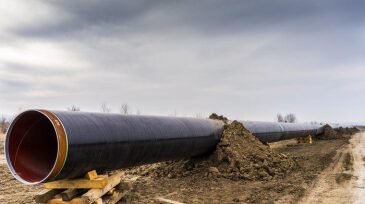
Approximately 90% of construction work has been completed on the pipeline, which is expected to transport up to 670,000 BOPD from the Permian Basin to the US Gulf Coast. Cactus II is one of several pipelines aimed at alleviating takeaway concerns in the Permian.