Testing page for app
-
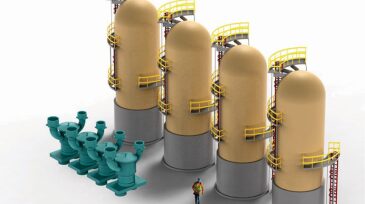
 Hydrocarbon processing and treating systems often require large and elaborate surface facilities. When operating in challenging locations, such as deep water or the Arctic, these systems can be expensive. This paper discusses a new adsorption-based gas-separation technology platform.
 -
This paper uses a simulation model to evaluate and compare the thermal efficiency of five different completion design cases during the SAGD circulation phase in the Lloydminster formation in the Lindbergh area in Alberta, Canada.
-
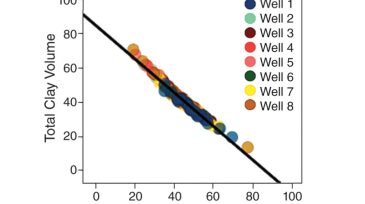
This paper demonstrates how engineers can take advantage of their most-detailed completions and geomechanical data by identifying trends arising from past detailed treatment analyses.
-
The operator piloted a new well-completion design combining inflow-control valves (ICVs) in the shallow reservoir and inflow-control devices (ICDs) in the deeper reservoir, both deployed in a water-injector well for the first time in the company’s experience.
-
This paper covers the staged field-development methodology, including analysis and evaluation of various development concepts, that enabled the company to optimize both completion design and artificial-lift selection, reducing downtime and lowering operating costs by nearly 50%.
-
In this work, the authors developed a numerical model of in-situ upgrading (IU) on the basis of laboratory experiences and validated results, applying the model to an IU test published in the literature.
-
The cost reduction per barrel of oil produced and the extension of sustainable production life by optimization have been two major areas of focus, but the investments in new technologies and recovery-improvement research have not received sufficient attention during the downturn.
-
This paper shares experience gained in the Ashalchinskoye heavy-oil field with a two-wellhead SAGD modification. As a result of a pilot for this technology in Russia, the accumulated production of three pairs of these wells is greater than 200,000 tons.
-
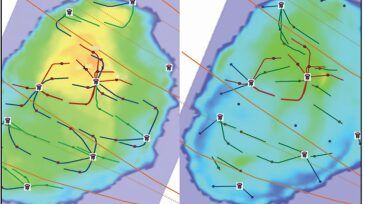
To enhance the applicability of localization to various history-matching problems, the authors adopt an adaptive localization scheme that exploits the correlations between model variables and observations.
-
Machine-learning methods have gained tremendous attention in the last decade. The underlying idea behind machine learning is that computers can identify patterns and learn from data with minimal human intervention. This is not very different from the notion of automatic history matching.