Testing page for app
-
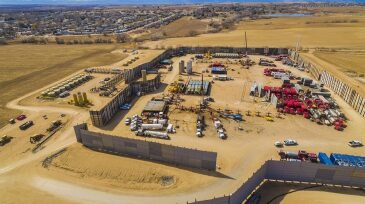
 Colorado voters soundly defeated a measure 6 November that would have restricted the vast majority of new development in the country’s fifth largest oil-producing state. The outcome was a big relief for the oil and gas industry, but its existential fight in the state hasn’t ended.
 -
ROVs dominate the world of subsea inspections, maintenance, and repair, but as operators work in a post-downturn economy, autonomous systems have become more in demand. Autonomous inspections are possible today, but how can they help with light and heavy intervention?
-
Research has found that most cyberattacks against the energy and utilities industry transpire and thrive inside enterprise information-technology networks rather than critical infrastructure.
-
Israel is launching a new offshore bid round for gas-bearing blocks in the Eastern Mediterranean.
-
The tool, called the Field Analysis of Silica Tool, works with commercially available Fourier-transform infrared analyzers to determine a worker’s exposure to respirable crystalline silica dust, providing detailed results immediately following a worker’s shift.
-
DNV estimates that gas will be the world’s primary energy source by the mid-2020s. Growth in LNG capacity is expected as the midstream sector invests in connecting shifting sources of gas with changing demand centers. Other factors also will drive the globalization of gas trading markets.
-
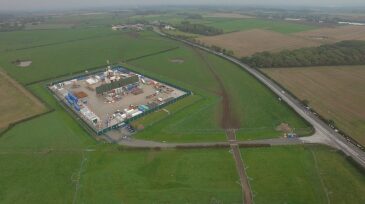
Small quantities of gas and water are flowing to the surface from the UK’s first horizontal shale well—just days after operator Cuadrilla paused injection work for a second time amid earthquakes.
-
An online seminar set for 14 November will introduce IPIECA's new Community Liaison Officers Team Building and Management Guidance.
-
Elevated concentrations of strontium, an element associated with oil and gas waste waters, have accumulated in the shells of freshwater mussels downstream from wastewater disposal sites, according to researchers from Penn State and Union College.
-
Data-driven methods offer significant advantages in the industry, under certain conditions, over conventional methods. But reservations still exist about their use. The paper serves to bridge the gap between unclear understanding of these methods and their successful acceptance and implementation.