Testing page for app
-
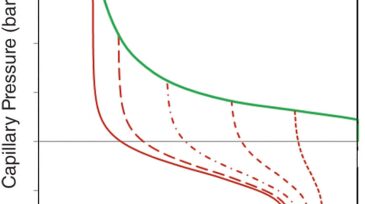
 This paper presents a saturation-modeling approach for fields and reservoirs with complex hydrocarbon-charging histories. The model resolves saturation-height functions for the primary-drainage, imbibition, and secondary-drainage equilibriums.
 -
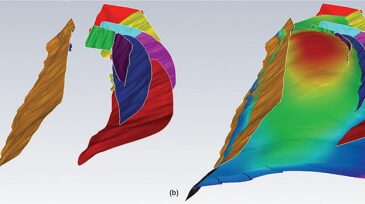
This paper proposes a novel work flow for structural-features modeling that allows the introduction of faults and other structural and nonstructural features to any simulation grid without modification.
-
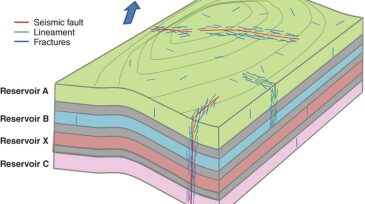
Natural fractures can have a significant effect on fluid flow by creating permeability anisotropy in hydrocarbon reservoirs.
-
A radical digital revolution is happening all around us (or so we are told). Applying this to reservoir simulation, we apparently need to understand better when and, more importantly, when not to use such technology—to appreciate its bounds, its limitations, its range of validity, and so on.
-
An SPE workshop held recently in Xian, China, examined effective and efficient development of fractured carbonate reservoirs. It was the third workshop sponsored by China’s Sinopec and attracted 80 attendees representing 13 organizations from seven countries.
-
Saudi Aramco’s aim to localize oilfield services in the kingdom is taking another step forward with an onshore drilling partnership with National Oilwell Varco.
-
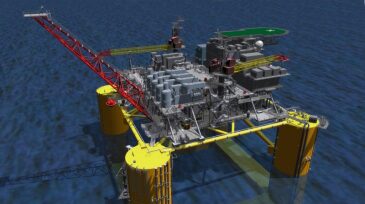
GATE will provide facility commissioning and Subsea 7 will provide a pair of infield production flowlines and the umbilical system for Shell’s recently sanctioned deepwater GOM development.
-
The Alaska Gasline Development Corp., a state-owned corporation, is preparing an equity offering for this summer for its $43-billion LNG project. BP agreed to sell natural gas from Prudhoe Bay for export to Asia-Pacific.
-
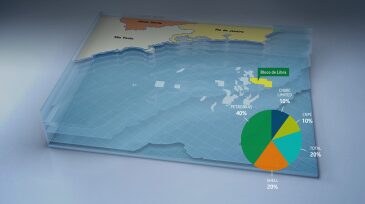
New local content regulations could speed up the pace of presalt oil production by more than 21 billion bbl by the mid-2020s. Karoon and Parnaíba Gás Natural are the first companies to apply to change their contract terms. Petrobras, Shell, BP, ExxonMobil, Petrogal, and Anadarko are also interested.
-
This paper highlights a pragmatic approach to managing carbon emissions from offshore installations operating on the UK Continental Shelf, while maintaining competitiveness and maximizing economic recovery, by illustrating the key challenges and opportunities.