Testing page for app
-
 Unconventional resources offer many substantial benefits, yet the rapid increase in production of these resources using hydraulic fracturing has generated scrutiny by some policymakers and advocates who cite health concerns.
-
It has been an impressive comeback for a technology that once stood on the brink of failure. The upstream oil and gas industry has largely resolved crippling technical challenges that shortened the life of fiber-optic cables in downhole applications and is now working on a big encore.
-
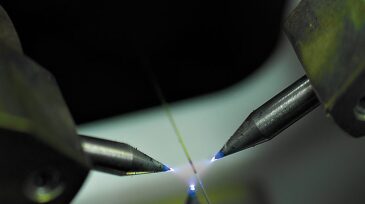
Downhole fiber-optic systems work by using a small laser that fires off a pulse of light through hair-thin cables made of silica glass.
-
Oil and gas companies have increasingly relied on complex data to delve into the Earth’s geology and find energy resources thousands of feet below the surface. They have turned to numbers when analyzing prospective acquisitions, capital expenditures, and other investments.
-
In the early 1980s, while the authors of the original paper were reassessing some old gravel-pack sands from a well, some sludge was noticed in the samples.
-
There is no doubt that North Sea activity, both its highs and lows, has been the benchmark of quality and efficiency for many decades.
-
Saudi Aramco says its Manifa field is an example of how it is combining its technology and innovation capabilities to develop one of the most challenging megaprojects in the history of the company.
-
Applying a cutoff consists of defining a threshold value on one or more logs to separate the reservoir intervals in which hydrocarbons are mobile from the gross rock thickness.
-
Any oil and gas deal usually involves a data room, where rich seams of proprietary information can be mined for a limited period.
-
This paper presents two real-field case studies from the Norwegian continental shelf that use available DFA data to support the assumptions made from other data on reservoir architecture between wells.